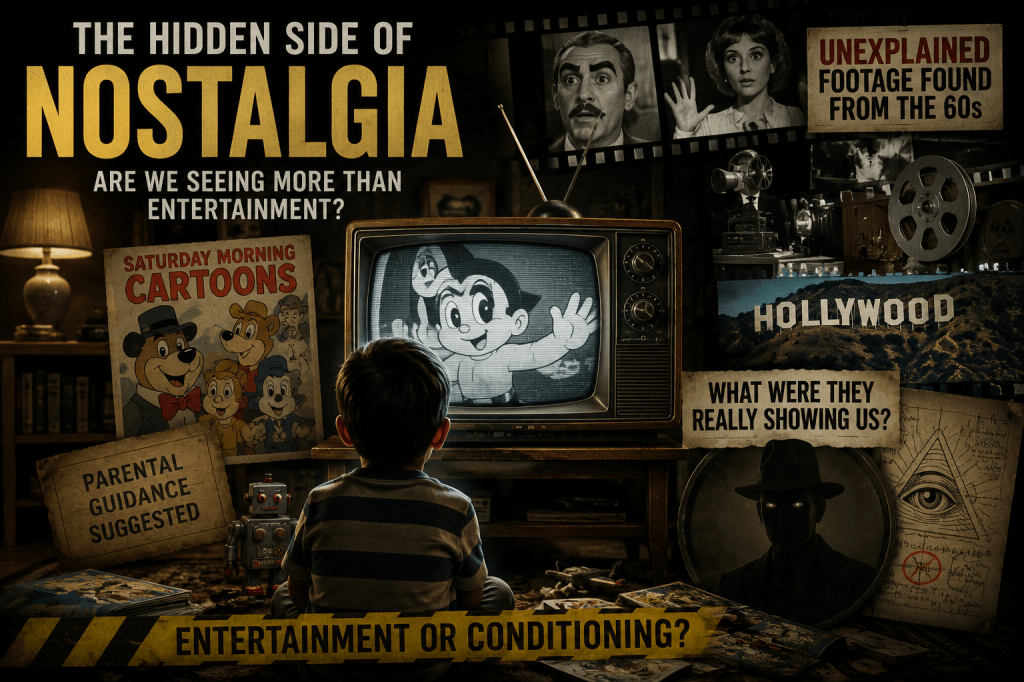
From Saturday morning cartoons to forgotten television reels, some pieces of media from the past leave viewers with an unsettling question: were they simply products of their time, or is there something stranger hiding in plain sight?
July 10, 2026
This article explores cultural observations, folklore, and paranormal speculation. The ideas discussed are not established facts but questions that continue to intrigue researchers, historians, and curious viewers alike. Parents should always provide context when children consume older media, just as they would with modern entertainment.
The Childhood We Remember
For millions of people, Saturday mornings meant a bowl of cereal and hours of cartoons. They entertained, inspired imagination, and became defining memories of childhood. Television was considered harmless fun, a shared cultural experience that shaped generations.
But looking back decades later, some viewers notice details they never saw as children—strange imagery, unsettling facial expressions, exaggerated movements, and moments that simply feel… off.
Is it nostalgia playing tricks on us, or are we noticing things with adult eyes that children naturally overlooked?
The Strange Footage of the Past
Film historians occasionally uncover reels from the 1940s, 50s, and 60s that seem oddly unsettling. Performers sometimes display exaggerated smiles, unnatural body language, or expressions that appear almost inhuman when viewed through today’s high-definition screens.
In many cases, these moments have ordinary explanations. Early film technology, lower frame rates, theatrical acting styles, and primitive makeup techniques can all create effects that feel eerie to modern audiences.
Yet some footage continues to spark debate because it doesn’t easily fit those explanations, leaving room for speculation and mystery.
Hollywood’s Fascination With the Camera
Hollywood has always understood one truth: the camera captures more than dialogue.
Actors spend years mastering facial expressions, eye movement, posture, and subtle gestures because audiences unconsciously respond to them. A slight glance can create trust. A smile can comfort—or disturb.
Some paranormal researchers suggest the camera may occasionally reveal things the human eye doesn’t immediately notice. Others believe the fascination simply reflects psychology: humans are remarkably skilled at detecting patterns and emotion in faces, even when none were intended.
Either way, the lens has always held a certain power.
Entertainment or Conditioning?
Some critics argue that entertainment does more than entertain. Stories shape beliefs, values, fears, and expectations, particularly during childhood when the brain is rapidly developing.
That doesn’t mean cartoons or classic television were created with sinister intentions. However, they undeniably influenced generations, just as today’s social media, streaming platforms, and video games shape modern audiences.
The question isn’t necessarily whether there was hidden programming.
It’s whether we underestimate the long-term influence of the media we consume.
Are We Looking for Something More Sinister?
This is where speculation enters the conversation.
Some believe unusual moments captured on film hint at spiritual influences, hidden symbolism, or forces operating just beyond our understanding. Others argue these interpretations arise because the human mind naturally seeks meaning in ambiguous images.
There is little evidence to support supernatural conclusions, but the fascination persists because the unexplained has always occupied a unique place in human culture.
Sometimes mystery survives precisely because it cannot be fully explained.
Final Thoughts
The past often feels stranger than we remember. Old cartoons, forgotten television broadcasts, and decades-old film reels can appear unsettling when viewed through modern eyes. Whether that unease comes from outdated production techniques, changing cultural norms, psychology, or something we don’t yet understand remains an open question.
Perhaps the greatest mystery isn’t what those old films contain.
It’s why they continue to make us look twice.
 The ChillX Zone
Leave a comment