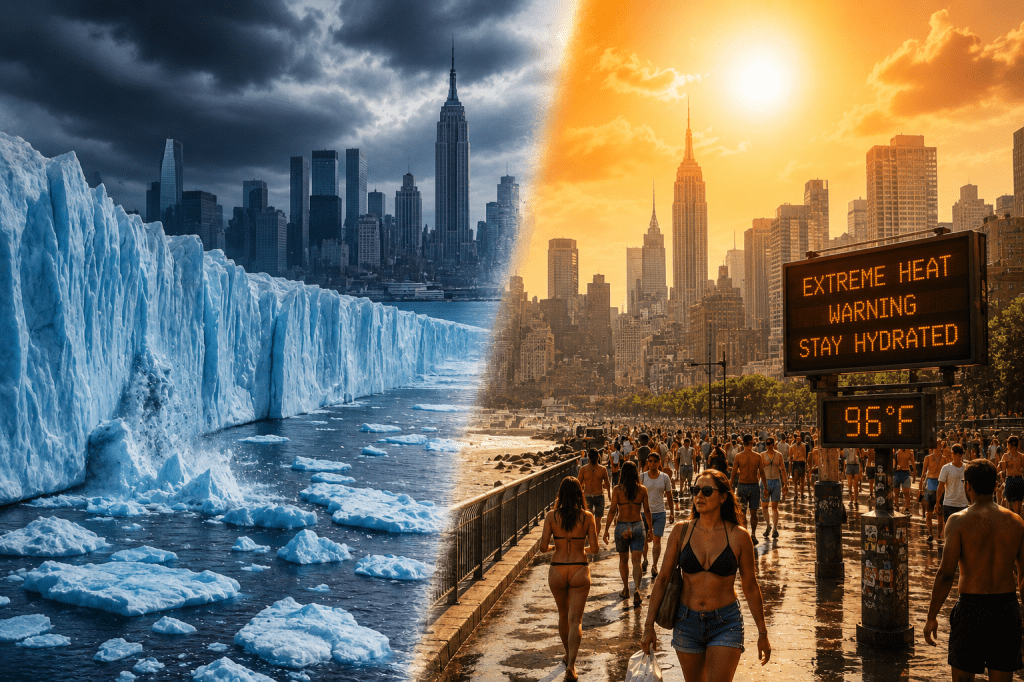
New York wasn’t built for tropical summers, yet each year the city feels a little warmer, a little wetter, and a little more unpredictable. What’s really happening to our climate—and where is all the melting ice going?
July 12, 2026
New York has never been an Arctic village, but its climate has changed dramatically over the past century. Summers are becoming hotter, heatwaves last longer, and heavy downpours occur more frequently than many lifelong residents remember.
The result is a city where tropical humidity, intense rainfall, and sweltering nights are becoming increasingly common. While no one is rushing to swim in the East River, there are days when Manhattan feels more like Miami than the New York of decades past.
Why Is the Planet Warming?
Scientists point to a combination of rising greenhouse gas concentrations, changing ocean temperatures, and long-term shifts in Earth’s climate system. Cities amplify the effect through the “urban heat island” phenomenon, where concrete, asphalt, and buildings absorb and retain heat long after sunset.
New York is warming because it’s experiencing both global climate change and the local effects of urban development.
What’s Happening in Antarctica?
Antarctica is a continent of extremes. While some areas have experienced periods of increased snowfall, the overall Antarctic ice sheet is losing more ice than it gains over the long term, particularly in West Antarctica. As glaciers flow into the ocean and ice shelves thin, they contribute to rising sea levels.
The picture is complex, but the long-term trend is clear: the planet is losing land ice overall.
Where Does All That Water Go?
When glaciers and ice sheets melt, the water doesn’t disappear—it flows into the world’s oceans. Combined with the fact that warmer seawater expands as it heats up, this causes global sea levels to rise.
Some of that extra water also becomes part of a more active water cycle. Warmer oceans evaporate more moisture into the atmosphere, which can fuel heavier rainfall in some regions while leaving others vulnerable to prolonged drought.
In short, a warmer planet doesn’t simply mean more heat—it means more extreme weather.
Why New York Is a Good Example
New York sits on the Atlantic coast, making it especially sensitive to rising sea levels, storm surges, and extreme rainfall. High tides reach farther inland than they once did, while intense summer storms can overwhelm drainage systems in minutes.
It’s a reminder that climate change isn’t only about distant glaciers or polar bears. It’s increasingly becoming a local story, affecting daily life in one of the world’s most recognisable cities.
Final Thoughts
Climate change rarely arrives as one dramatic event. Instead, it reveals itself through small shifts that gradually become impossible to ignore—hotter summers, heavier rain, rising seas, and changing seasons.
For cities like New York, the question is no longer whether the climate is changing. The real question is how quickly communities can adapt to a world that looks increasingly different from the one they were built for.
 The ChillX Zone
Leave a comment