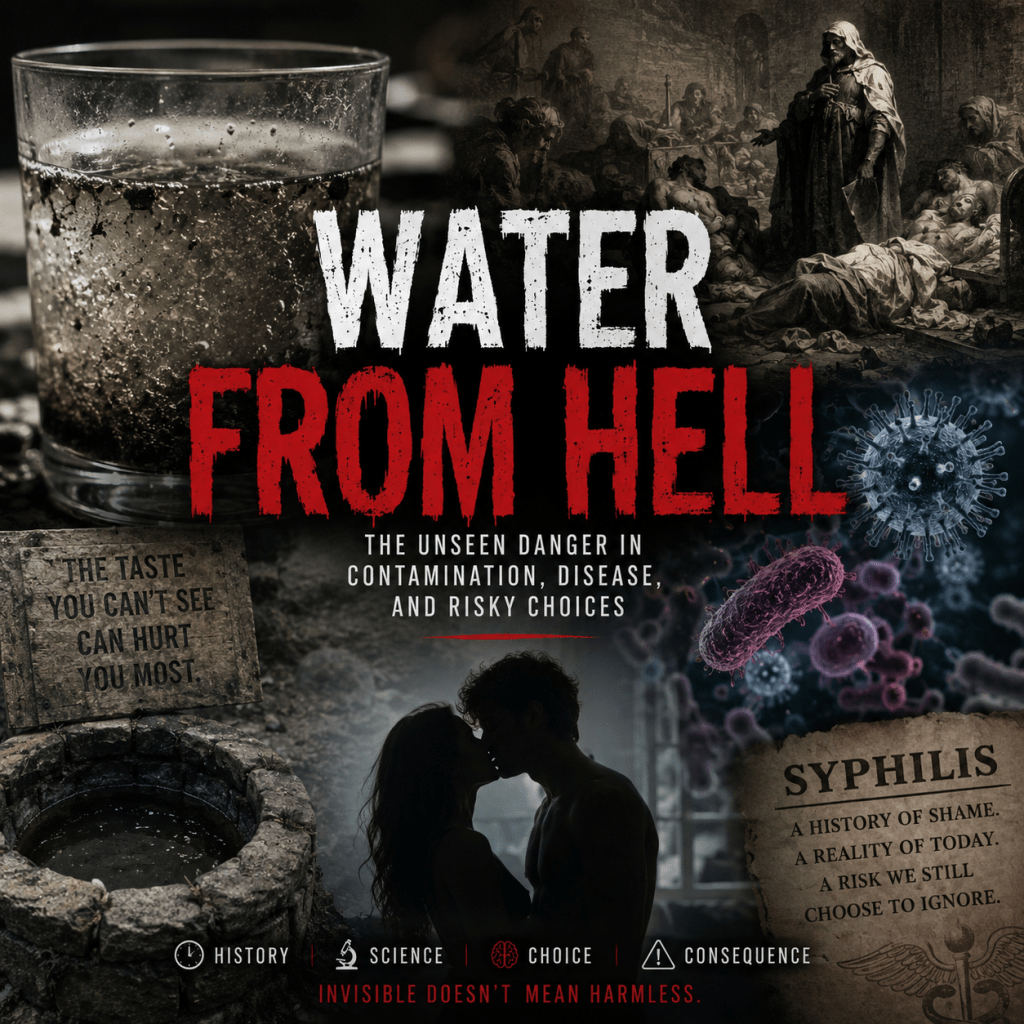
Water From Hell, Invisible Contamination, and the Risks Humans Ignore
May 8, 2026
Throughout history, people have described contaminated water in almost supernatural language. Ancient travelers, soldiers, and villagers often wrote about wells or rivers that tasted “cursed,” “sulfuric,” or “like hell itself.” Before modern science, invisible contamination terrified people because there was no clear explanation for sudden sickness.
During cholera outbreaks in the 1800s, entire towns believed dark forces had poisoned their water supplies. One American frontier account described stagnant barrel water as having “the taste of brimstone and rot,” after which several men reportedly became violently ill. Whether caused by bacteria, decay, or chemicals, people instinctively used spiritual imagery to explain contamination they could not see.
Humans fear invisible danger more than visible danger.
Uncovered Objects and Unseen Contamination
Even today, many people feel uncomfortable drinking from a cup left unattended or eating food left uncovered. Scientifically, this fear is not irrational. Contamination does not need to be visible to be harmful.
Airborne bacteria, viruses, chemical residue, insects, mold spores, and deliberate tampering can all affect uncovered items without obvious signs. Historically, before microscopes existed, these hidden dangers were interpreted as curses, demonic influence, or “unclean spirits.”
The idea of an unseen force tainting something pure has existed across cultures for centuries because humans naturally associate invisible harm with something sinister.
Why Humans Connect Disease With Morality
When diseases spread invisibly, societies often attach moral meaning to them. Waterborne illness was once viewed as punishment from God or evidence of corruption. The same happened with sexually transmitted diseases.
Few examples are more infamous than Syphilis.
When syphilis exploded across Europe in the late 1400s, many believed it was a curse or divine punishment. The disease caused horrific symptoms in later stages: sores, blindness, neurological damage, insanity, and eventually death if untreated.
Because people did not understand bacteria, the disease became wrapped in fear, shame, and superstition.
The Hidden Nature of STDs
One reason sexually transmitted diseases remain dangerous is because many spread silently. Symptoms may not appear immediately, and some disappear temporarily while infection remains active.
A person can look completely healthy while carrying and transmitting disease.
This creates a disturbing parallel between contaminated water and risky sexual behavior: both involve trust in something that appears safe on the surface while danger remains hidden underneath.
Public health experts consistently warn that sexual activity involving multiple partners significantly increases exposure risk to infections such as syphilis, gonorrhea, herpes, HPV, hepatitis, and HIV. The mathematics are straightforward: increased exposure raises probability.
The Psychology of Repeated Risk
Another danger is normalization.
People exposed repeatedly to risky environments often become desensitized to warning signs. What initially feels dangerous eventually starts feeling ordinary. This applies to contaminated environments, substance use, and sexual behavior alike.
Humans tend to judge safety emotionally rather than statistically. If consequences are not immediate, people assume the danger is low. But many infections, like contaminated water sources, cause damage slowly and invisibly before symptoms emerge.
Final Thoughts
For centuries, people described poisoned water as “water from hell” because invisible contamination felt unnatural and terrifying. Today we understand germs, bacteria, and disease scientifically, yet the core fear remains unchanged: humans are deeply vulnerable to dangers they cannot immediately see.
Whether discussing contaminated water, uncovered food, or sexually transmitted disease, the underlying lesson is the same:
Not everything dangerous looks dangerous at first glance.
 The ChillX Zone
Leave a comment