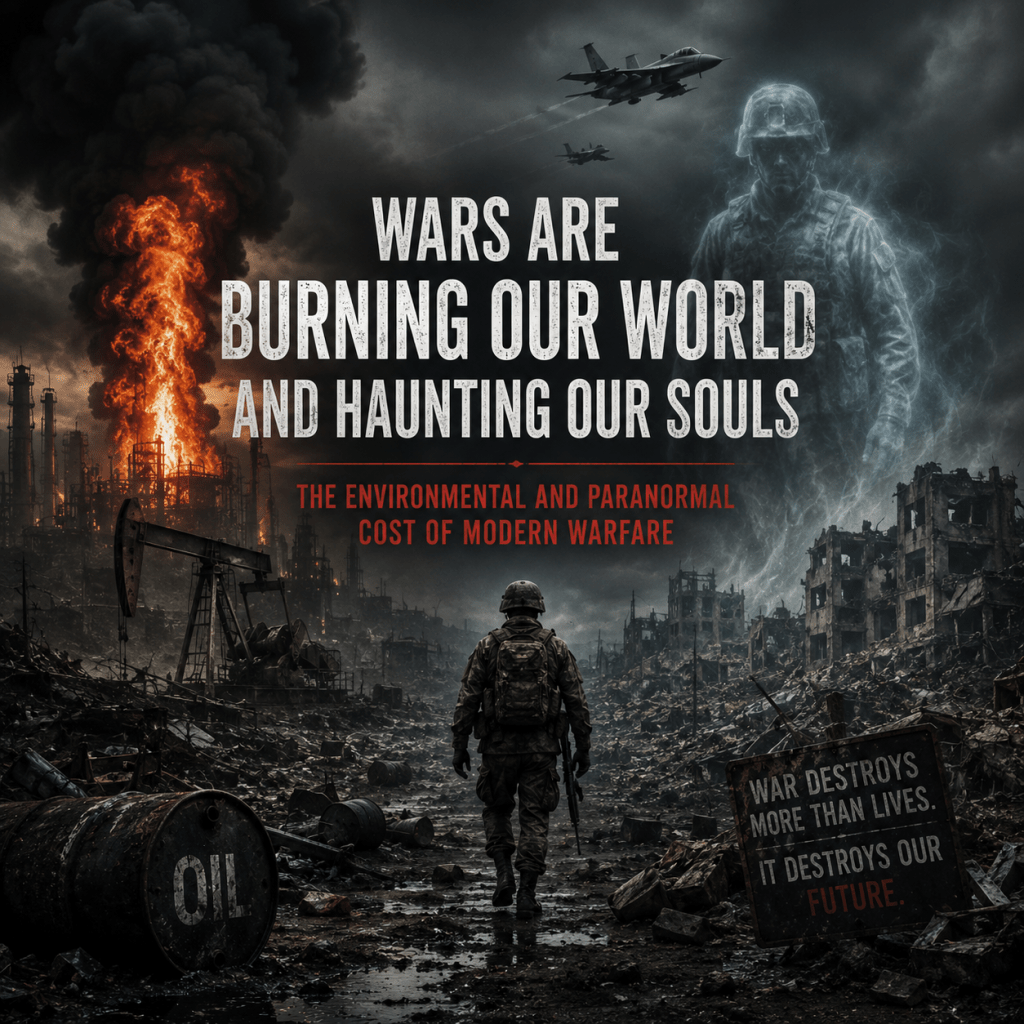
From burning oil fields to ghost stories emerging from battle zones, experts and witnesses say modern warfare is leaving behind both physical devastation and psychological hauntings.
May 1, 2026
As global conflicts continue dominating headlines this May, environmental researchers and humanitarian groups are warning that modern warfare is causing damage far beyond the battlefield. Cities are reduced to rubble, fuel depots burn for days, forests are destroyed, and critical water systems collapse under repeated attacks.
But alongside the environmental devastation, another phenomenon often emerges in war zones: reports of paranormal experiences, unexplained sightings, and deeply unsettling psychological encounters among civilians and soldiers alike.
Throughout history, war has frequently become linked with stories of ghosts, curses, shadow figures, and unexplained events. Experts believe extreme trauma, fear, and environmental chaos may contribute to these experiences, but the stories continue appearing generation after generation.
Oil Fires and Toxic Landscapes Are Changing Entire Regions
Modern warfare increasingly targets infrastructure tied directly to energy and survival. Oil facilities, pipelines, power stations, and industrial zones are often destroyed during conflicts, releasing massive amounts of smoke and pollutants into the atmosphere.
Environmental researchers have warned that these attacks contaminate farmland, poison rivers, and damage ecosystems for decades. In some regions, fires from fuel depots have burned so intensely they altered local air quality across neighboring countries.
Military operations themselves also consume enormous amounts of fossil fuels. Fighter jets, tanks, naval fleets, and missile systems require huge quantities of energy, making warfare one of the least discussed contributors to global emissions and environmental collapse.
Battlefields Have Always Produced Paranormal Legends
Alongside the physical destruction, war zones have long generated stories of unexplained phenomena. Soldiers throughout history have described hearing phantom voices, witnessing shadowy figures in abandoned ruins, or sensing invisible presences during combat.
Some of the world’s most famous paranormal legends originated directly from periods of war. Stories of ghost soldiers wandering battlefields after death became common after both World Wars, while modern conflicts have produced similar reports from devastated cities and military outposts.
Researchers studying trauma and psychology often attribute these experiences to stress, sleep deprivation, grief, and survival instincts. However, paranormal investigators argue that locations saturated with violence and death may leave behind what they describe as “residual energy.”
Destroying the Very Resources Nations Depend On
Critics of prolonged warfare argue that many modern conflicts ultimately destroy the same natural resources and infrastructure countries later struggle to rebuild.
Water systems, farmland, ports, forests, and power grids that took generations to develop are often wiped out within weeks. Economists and environmental analysts increasingly describe this cycle as self-destructive and unsustainable.
In some conflict zones, abandoned industrial areas and destroyed neighborhoods later become the focus of local ghost stories and urban legends. Residents returning to damaged communities have reported eerie sounds, unexplained lights, and intense feelings of dread inside ruined buildings.
Whether psychological or paranormal, these stories often become part of the long-term cultural aftermath of war.
Fear, Trauma, and the Rise of “Haunted” War Zones
Psychologists note that extreme trauma can heighten human sensitivity to fear and unusual perceptions. Darkness, destruction, constant danger, and grief create conditions where paranormal interpretations become more common.
At the same time, social media and online paranormal communities have amplified stories emerging from conflict zones. Videos claiming to show unexplained figures, strange lights, or mysterious sounds frequently circulate during and after major conflicts.
While many claims remain unverified, the connection between war and paranormal folklore continues resurfacing throughout history.
Why the Debate Continues
Environmental experts argue that modern warfare represents one of humanity’s most destructive cycles — consuming enormous resources while simultaneously destroying ecosystems, infrastructure, and human lives.
Paranormal researchers, meanwhile, continue exploring why places marked by violence and tragedy so often become associated with ghost stories and unexplained experiences.
Whether viewed through science, psychology, or the supernatural, one reality remains clear: wars leave scars that extend far beyond the battlefield itself.
 The ChillX Zone
Leave a comment