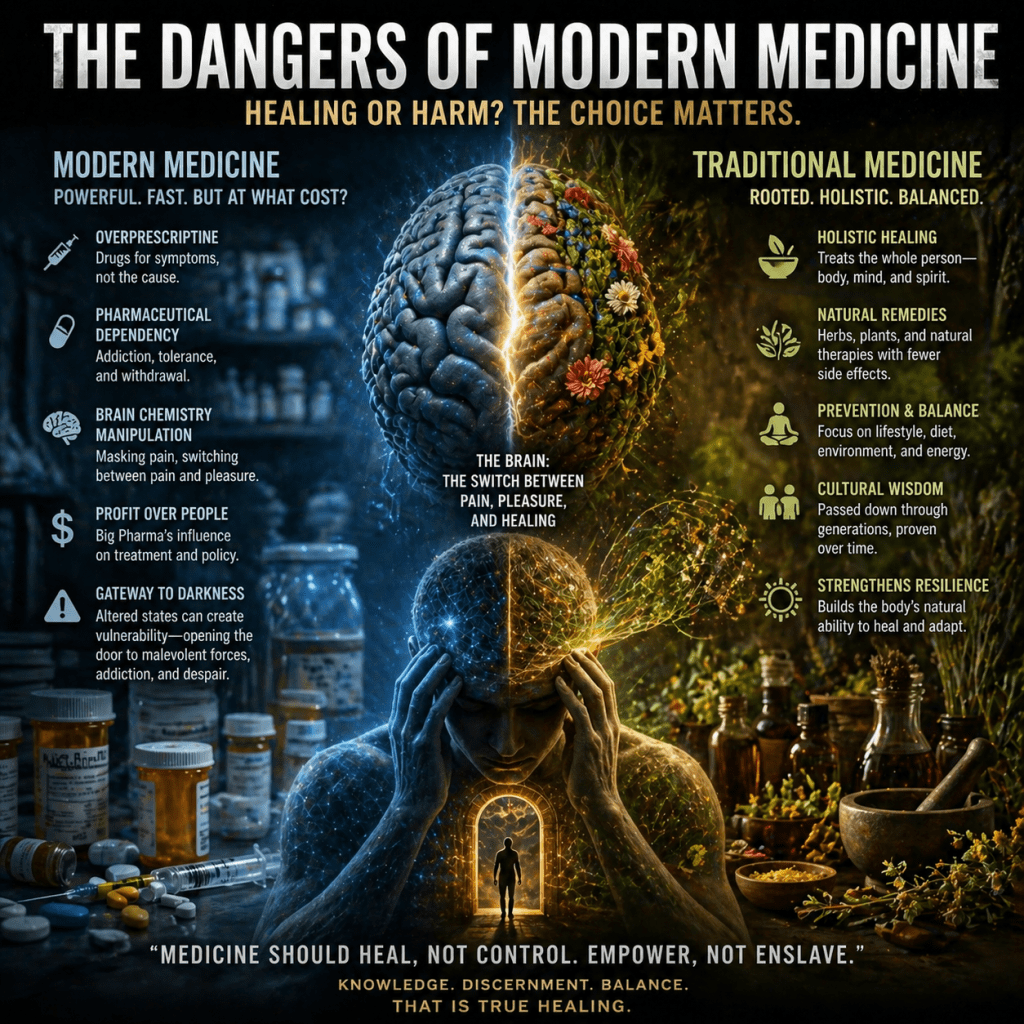
Between Healing and Harm
April 23, 2026
Modern medicine has achieved extraordinary breakthroughs over the past century. Vaccines have eliminated once-deadly diseases, surgical techniques save millions of lives each year, and pharmaceuticals treat conditions that were once considered untouchable.
Yet alongside these achievements, a growing number of observers and patients have begun asking difficult questions about the risks and unintended consequences of modern medical systems.
Powerful drugs, aggressive treatments, and complex healthcare industries can sometimes create environments where healing becomes complicated by over-prescription, dependency, or commercial pressure. Painkillers, sedatives, and psychiatric medications in particular have sparked debates about how medicine manages the delicate balance between relief and reliance.
The modern medical landscape is not simply a place of healing—it is also a place where caution and responsibility are essential.
Traditional Medicine and Cultural Healing
Long before hospitals and pharmaceutical laboratories, communities relied on traditional healing systems passed down through generations.
Across cultures, herbal remedies, spiritual practices, physical therapies, and communal care played central roles in maintaining health. Traditional healers often emphasized balance—between body, mind, environment, and spirit.
In many cases, these practices focused on prevention and lifestyle rather than rapid intervention.
While traditional medicine does not replace the scientific advances of modern healthcare, many people today are rediscovering its value. Practices such as herbal medicine, meditation, acupuncture, and holistic approaches to nutrition are increasingly studied and sometimes integrated into modern treatment plans.
These older systems remind us that healing has always involved more than chemistry alone.
The Brain’s Switch Between Pain and Pleasure
One of the most powerful tools—and risks—within modern medicine lies in the way treatments interact with the human brain.
Pain relief medications, antidepressants, stimulants, and sedatives all affect the brain’s reward and regulation systems. These chemicals influence how the brain processes pain, pleasure, stress, and emotional stability.
When used carefully under medical supervision, such treatments can help restore balance.
However, when misused or overprescribed, they can create a cycle where the brain begins relying on external substances to regulate its natural systems.
This can blur the line between healing and masking symptoms. Instead of addressing underlying causes, treatments may simply shift the brain between states of discomfort and temporary relief.
In extreme cases, this cycle has contributed to addiction crises and widespread concerns about pharmaceutical dependency.
Spiritual Interpretations and Psychological Vulnerability
Beyond biological concerns, some spiritual traditions interpret altered mental states in symbolic or metaphysical ways.
Throughout history, cultures have warned that weakened mental or emotional states can leave individuals vulnerable—not necessarily to literal supernatural forces, but to harmful influences, destructive behaviors, or psychological manipulation.
In folklore and spiritual language, such vulnerabilities were sometimes described as openings or gateways—moments when negative forces could influence a person’s thoughts or actions.
Modern psychology tends to frame these experiences differently, speaking instead about trauma, stress, dissociation, and mental health disorders.
Yet the metaphor remains powerful. When the mind is overwhelmed, exhausted, or chemically destabilized, a person may feel as though something foreign has taken control of their well-being.
In symbolic terms, some traditions describe this as creating a “stargate” for malevolent forces, though most contemporary scholars interpret this language as a way of expressing deep psychological vulnerability.
Finding Balance in a Complex World
The discussion surrounding modern medicine is not about rejecting scientific progress.
Hospitals, doctors, and medical researchers have saved countless lives and will continue to do so. Modern medicine remains one of humanity’s greatest achievements.
However, awareness is equally important.
Balancing advanced medical treatment with preventative care, mental health awareness, cultural healing traditions, and responsible prescribing practices may offer a more stable path forward.
Healing, after all, has always involved more than a single method.
It requires attention to the body, the mind, and the environment in which a person lives.
And in a world where both science and tradition continue to evolve, the most powerful medicine may be the wisdom to recognize when each approach has its place.
 The ChillX Zone
Leave a comment