When Fear in Salem Became Public, Personal, and Permanent
March 2, 1692
Filed from Massachusetts, mid-1990s — tracing the day panic stepped into the open
If March 1, 1692, was the paperwork, March 2 was the spectacle.
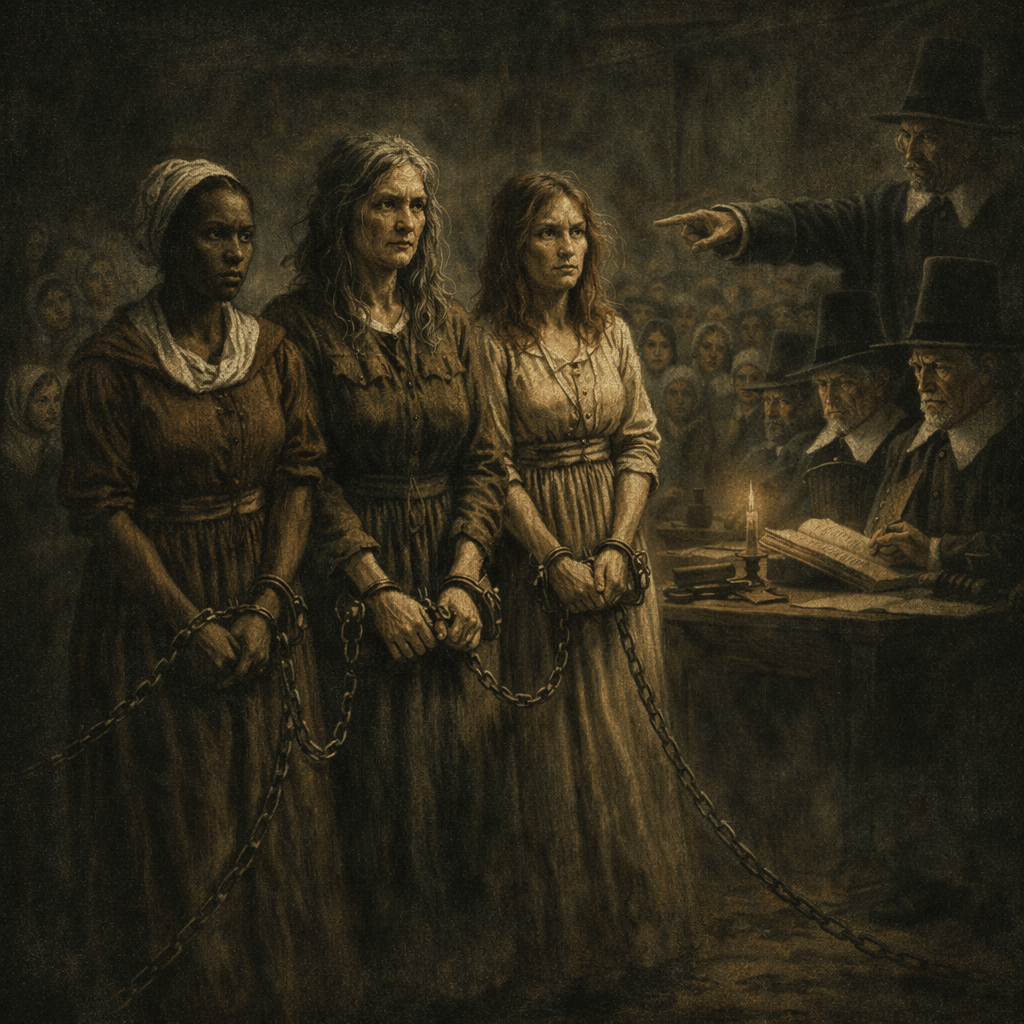
The morning after arrest warrants were issued in Salem Village, the accused were brought in for examination. On March 2, 1692, three women — Tituba, Sarah Good, and Sarah Osborne — faced local magistrates for questioning in what would become the opening act of the Salem Witch Trials.
It was no longer whispers in kitchens.
It was official.
And it was public.
The Examination Begins
The questioning took place in Salem Village (now Danvers), under intense scrutiny from townspeople already primed to believe something supernatural was unfolding.
The accused stood before magistrates John Hathorne and Jonathan Corwin. The room was crowded. The afflicted girls were present.
As the women denied the charges, the girls reportedly convulsed, screamed, and claimed invisible forces were attacking them in real time. Each denial was met with another dramatic outburst.
To modern ears, it sounds theatrical.
To the 17th-century Puritans watching, it looked like proof.
Tituba’s Confession
Under pressure, Tituba — an enslaved woman in Reverend Samuel Parris’s household — delivered the testimony that changed everything.
She confessed.
She described black dogs, red cats, a tall dark figure. She claimed other witches were operating in the colony. Whether her confession was coerced, strategic, or born of fear, it validated the community’s worst suspicions.
From that moment forward, this was no longer a local dispute.
It was a spiritual war.
The Crowd Effect
Standing in Salem today in the 1990s, it’s easy to underestimate how powerful a public accusation can be. But on March 2, 1692, hysteria fed on visibility.
Neighbors watched neighbors collapse in fits. Authority figures nodded gravely. Spectral evidence — visions, dreams, invisible torment — was treated as legitimate.
No fingerprints. No physical proof.
Just belief.
And belief was enough.
The Shift from Rumor to Movement
March 2 marks the moment the Salem panic gained momentum. The examinations were not trials yet — but they established a template.
Accusation.
Public reaction.
Spiritual explanation.
Authority validation.
Over the next months, that pattern would repeat again and again.
By the time the hysteria ended in 1693, 20 people had been executed.
Looking Back from Three Centuries Later
There’s no confirmed paranormal activity tied to March 2. No verified apparitions haunting the old meetinghouse grounds.
What lingers is something more unsettling: documentation of how quickly fear spreads when reinforced by authority.
The Salem Witch Trials weren’t born in one dramatic moment.
They were built day by day.
March 1 filed the paperwork.
March 2 made it real.
And once it was real, there was no easy way to stop it.
 The ChillX Zone
Leave a comment