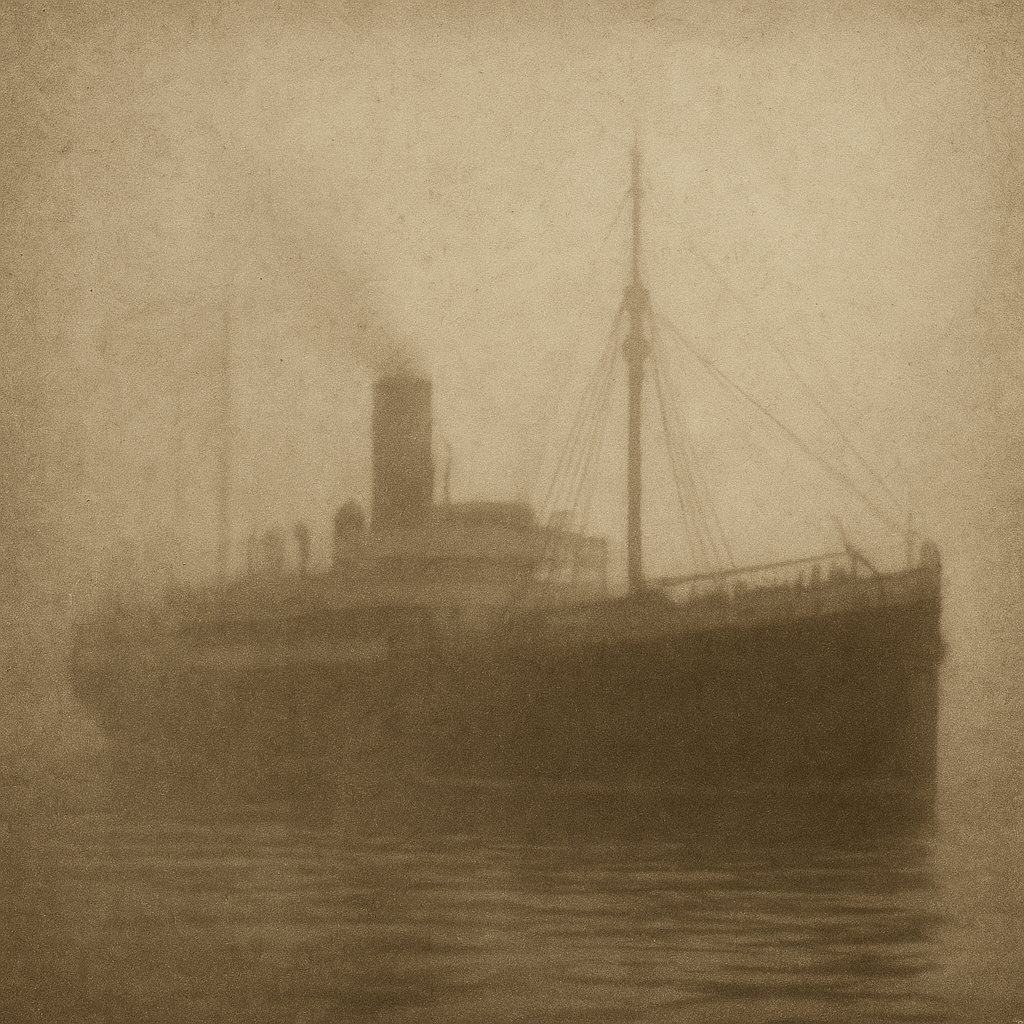
THE MAIL BOAT THAT STILL ANSWERS BACK
DUBLIN, IRELAND — October 10, 2025
The Irish Sea was flat this morning—gray as tin, quiet as glass. Yet off Dún Laoghaire, the radios were alive again.
Every year, around this date, the static comes. Three short bursts. A pause. Then one long one. Divers say it sounds like Morse code.
Locals say it’s the Leinster, calling home.
The RMS Leinster left Kingstown on October 10, 1918, carrying mail, soldiers, and civilians bound for Wales. Not long after departure, German submarine UB-123 launched two torpedoes. The ship split apart within minutes. More than 700 aboard, 564 dead, most of them lost to the cold.
But the tragedy didn’t stay buried.
Echoes from the Deep
At the maritime museum, curator Maeve Kearney keeps a bent brass mail slot recovered in 1968. “We used to think it was superstition,” she tells The Post. “But the divers come back shaken. They hear knocking down there—slow, deliberate. It stops when they move toward it.”
Earlier this week, a sonar team mapped the wreck for the first time in years. Their audio logs—shared exclusively with The Post—show faint metallic pulses repeating every 20 seconds. Engineers dismissed it as “pressure harmonics.” The divers disagreed. “It’s too even,” said one. “Like someone trying to spell something.”
Letters That Shouldn’t Be
In 1973, a sealed mailbag was dredged up near Howth. Inside were five letters addressed to Wales—edges clean, ink sharp, as if written yesterday. Lab tests said impossible; the paper fibers hadn’t aged a day. One bore the line:
“The sea is calm. We will be across before noon.”
It was dated the morning the Leinster sank.
More recently, in 2021, a fisherman out of Holyhead found an envelope tangled in his nets. It was blank, save for a faint salt-white stamp of a postmark: OCT 10 1918. He keeps it sealed in plastic. “Every time I touch it,” he says, “the radio goes fuzzy.”
The 2025 Dive
Diver Ronan Ellis, part of Ireland’s National Maritime Survey, made a descent two days ago. He described the wreck as “frozen mid-breath.” When asked what he heard, he hesitated. “You don’t want to say it out loud,” he said finally. “But yes—there was tapping. Same rhythm we’ve heard before. Like a code, repeating itself.”
Ellis’s helmet mic picked up a single word fragment when the sound was filtered later—just three syllables of garbled tone. Audio technicians claim it matched the pattern for help.
The Boat in the Mist
On clear nights, residents along the coast still see lights out at sea. A single mast lamp. A wisp of smoke. The shape of a ship that wasn’t there a moment ago. Fishermen call it “the Mail Boat in the Mist.” Some say it follows them home until dawn, then fades back into the fog.
A Delivery That Never Ends
Historians remind readers to separate myth from memory. But along this coast, both live comfortably side by side. Every October 10, the sea hums with faint radio pops. A knock echoes through sonar. And once again, the Leinster—the mail steamer that never finished her route—seems to be sorting letters no one will ever read.
Maybe it’s just current and metal. Maybe it’s something else. Either way, the message is the same: the mail still moves, and the sea still answers back.
 The ChillX Zone
Leave a comment