Blaze Ends the Legend of England’s Most Haunted House
BORLEY, Essex (June 28, 2025)
Location: Borley, Essex, England
Constructed: 1862
Destroyed by Fire: February 27, 1939
Demolished: 1944
Known For: Widely regarded as England’s most famous haunted house
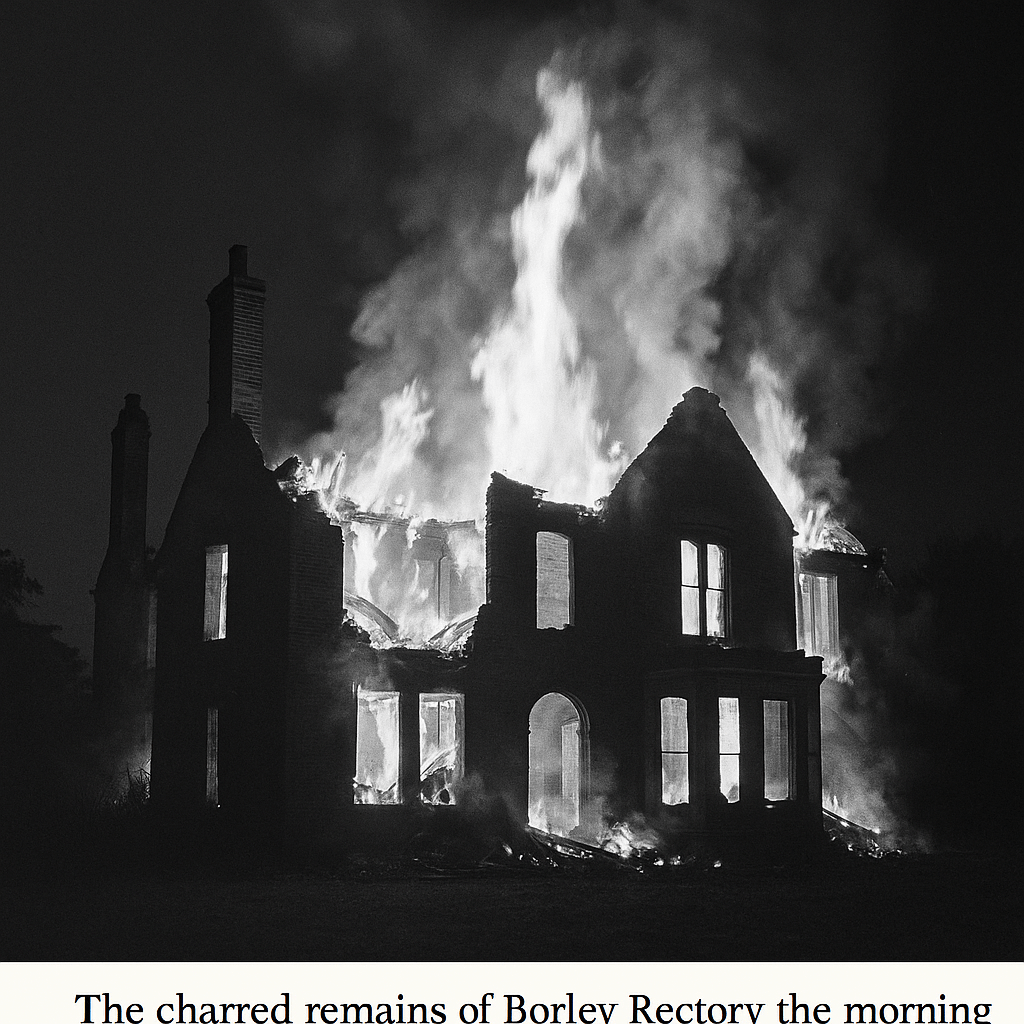
ESSEX, England (June 28, 2025) — Eighty-six years ago this year, an eerie glow illuminated the Essex countryside as Borley Rectory—the Victorian mansion long known as England’s most haunted house—was consumed by flames. The fire broke out late on the night of February 27, 1939. By dawn, little remained but scorched brick walls and smoking ruins. The fire destroyed the building, but it only deepened the legend surrounding Borley Rectory.
More than eight decades later, the mystery continues to captivate believers, skeptics, historians, and paranormal investigators alike.
Echoes of the Unseen
Constructed in 1862 near the quiet village of Borley, the rectory quickly earned a reputation for unexplained occurrences. Residents reported hearing phantom footsteps echo through empty hallways, bells ringing without anyone nearby, mysterious messages appearing on walls, and a ghostly nun silently crossing the grounds at dusk.
Stories of strange phenomena spread throughout Essex, transforming the secluded rectory into one of Britain’s most discussed haunted locations.
In 1929, renowned paranormal investigator Harry Price began a series of investigations that would bring international attention to Borley Rectory. Armed with cameras, notebooks, and contemporary investigative equipment, Price documented reports of unexplained cold spots, moving objects, mysterious voices, and shadowy figures seen through the rectory’s windows.
Price would later describe Borley Rectory as “the most haunted house in England,” a phrase that became inseparable from the property and remains associated with it today.
The Fire That Ended an Era
After years of controversy surrounding its alleged hauntings, Borley Rectory ultimately met a very ordinary fate.
On the evening of February 27, 1939, owner Captain W. H. Gregson accidentally overturned an oil lamp. Within minutes, flames spread rapidly through the timber-framed structure, engulfing the building before firefighters could contain the blaze.
Not everyone accepted the official explanation.
Some local residents later claimed they saw a woman dressed in white standing motionless in an upstairs window as the fire consumed the building.
“She was there, plain as day,” one witness later recalled. “The moment we saw her, the roof gave way.”
Fire investigators concluded the blaze was accidental.
Believers insisted it was Borley Rectory’s final supernatural manifestation.
From Ruins to Legend
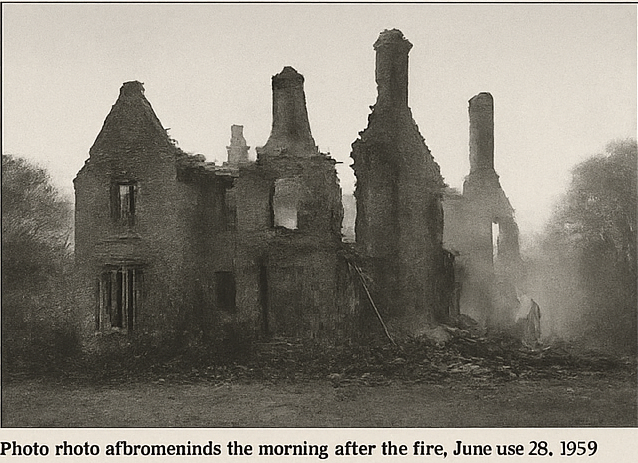
The remaining shell of the rectory stood for several years before being demolished in 1944.
Today, little survives beyond scattered brick foundations and overgrown pathways. Yet the location continues to attract paranormal investigators, historians, photographers, and curious visitors from around the world.
Some visitors report hearing soft cries drifting across nearby fields after sunset.
Others describe sudden drops in temperature, unexplained feelings of being watched, or pale figures that seem to vanish into the darkness.
Whether these experiences arise from expectation, folklore, or something genuinely unexplained remains a matter of continuing debate.
Borley Rectory Timeline
- 1862 — Borley Rectory is constructed.
- 1863 — Earliest reports of paranormal activity emerge.
- 1929–1937 — Harry Price conducts his investigations.
- February 27, 1939 — Fire destroys the rectory.
- 1944 — Remaining ruins are demolished.
A Mystery That Refuses to Fade
Borley Rectory no longer stands, but its reputation has endured for generations.
Whether regarded as one of history’s greatest ghost stories or as an enduring piece of English folklore shaped by rumor and eyewitness testimony, the site remains among the world’s most recognizable haunted locations.
Long after the flames were extinguished, Borley Rectory continues to fascinate each new generation. Its story endures as one of the most compelling legends in British paranormal history, where history, folklore, and the possibility of the unexplained continue to meet.


 The ChillX Zone
Leave a comment