The Deadly March 11 Storm That Paralyzed the Northeast
March 11, 2026
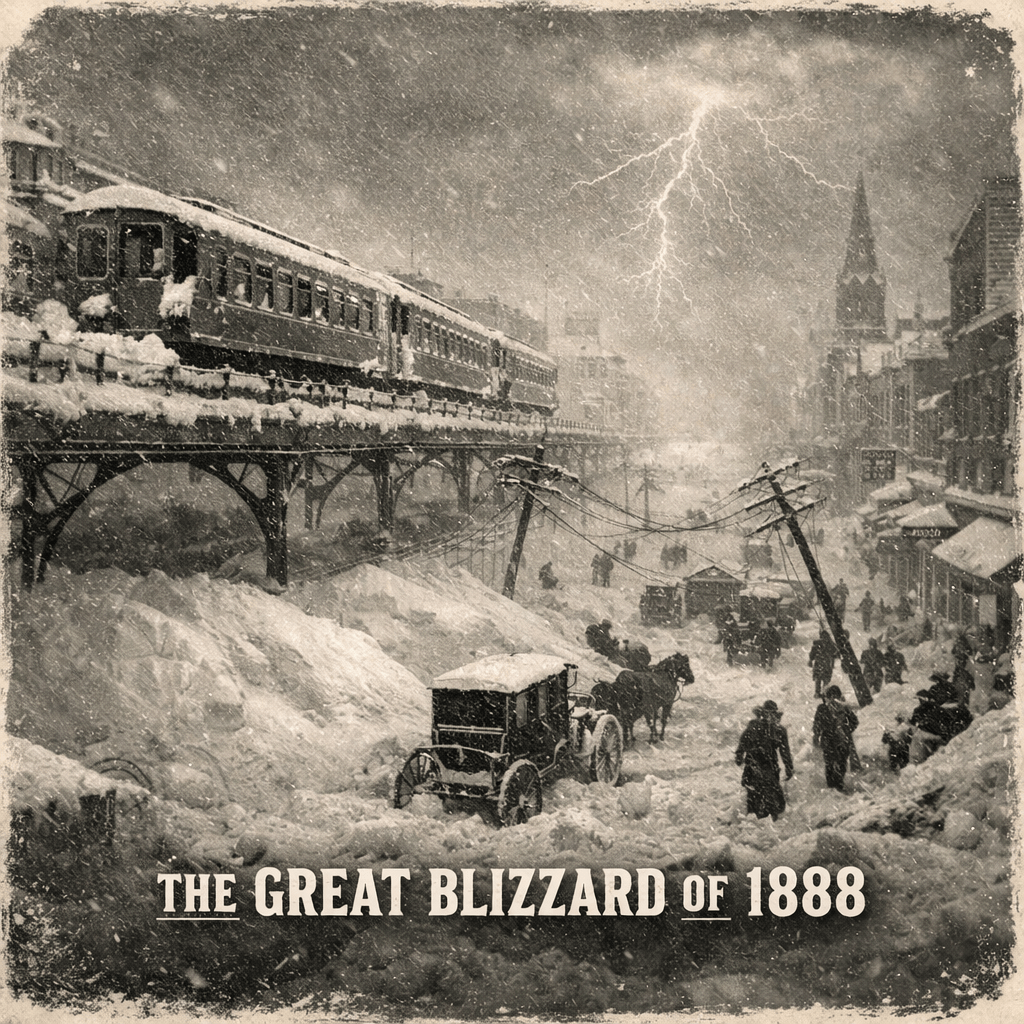
On March 11, 1888, one of the most devastating winter storms in American history began sweeping across the northeastern United States. What started as an ordinary late-winter day quickly transformed into a powerful blizzard that buried cities such as New York, Boston, and Philadelphia beneath massive snowdrifts. By the time the storm finally ended on March 14, more than 400 people had lost their lives and the entire region had been brought to a standstill.
Cities Frozen in Place
The storm arrived with very little warning. Weather forecasting in the late nineteenth century was still limited, and most residents had no idea how dangerous the conditions would become. As temperatures dropped sharply, heavy snow began falling while fierce winds pushed the storm into full force. Winds reaching around 45 miles per hour created blinding whiteout conditions, and enormous drifts formed in streets and between buildings.
New York City was hit especially hard. Elevated trains became stuck on their tracks, leaving passengers stranded for hours and sometimes days. Railroads across the Northeast were forced to stop operating entirely. Streets filled with snow so quickly that horse-drawn carriages could no longer move through the city, leaving many people trapped wherever they happened to be when the storm intensified.
Communication Collapse
As the blizzard grew stronger, the region’s communication systems began to fail. Telegraph poles and wires collapsed under the weight of snow and ice, cutting off long-distance communication between cities. With transportation halted and telegraph lines destroyed, many communities were effectively isolated during the worst of the storm.
Many victims were caught outside as the weather worsened rapidly. Some were later found frozen in the streets, unable to reach shelter in time. Emergency services struggled to respond because roads were completely buried beneath snowdrifts that in some places reached incredible heights.
A Disaster That Changed Cities
The Great Blizzard of 1888 exposed how vulnerable rapidly growing American cities had become. At the time, most power and communication lines ran above ground, making them extremely vulnerable to severe weather. After the storm, city planners began pushing for major changes in infrastructure.
New York City eventually moved many of its electrical and communication lines underground, and the disaster helped accelerate plans for a fully developed subway system. These changes were designed to prevent a similar shutdown from happening again.
More than a century later, the Great Blizzard of 1888 remains one of the most powerful winter storms ever recorded in the United States. The storm that began on March 11 is still remembered as the moment when nature brought some of the nation’s largest cities to a complete halt.
 The ChillX Zone
Leave a comment