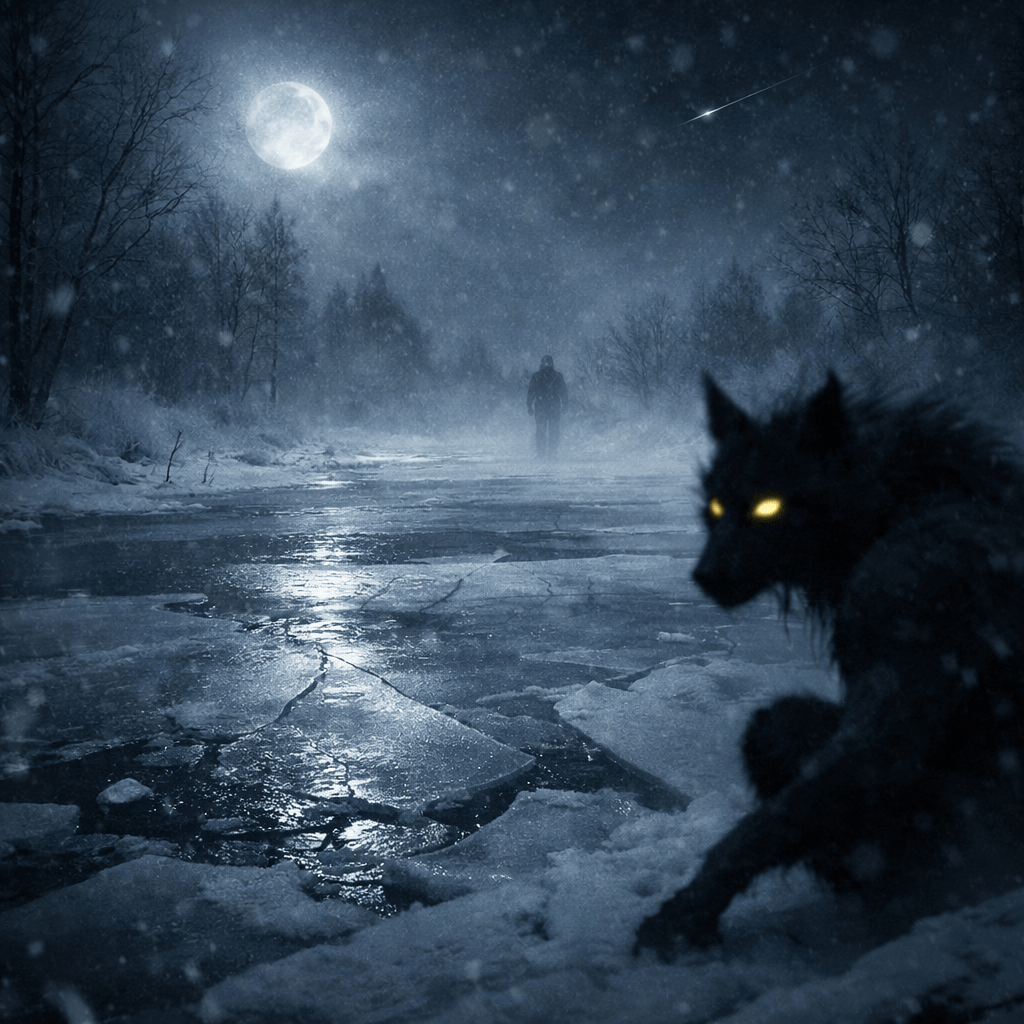
Extreme Cold, Disappearance, and the Winter State of Emergency
February 18, 2026
When temperatures plunge below freezing and sink below zero, winter becomes more than weather — it becomes a threat. Snow compacts into hard crust and ice. Permafrost locks the ground like concrete. Lakes seal over with shifting ice sheets that look solid but can fracture without warning. In these conditions, states of emergency are declared as wind chills turn lethal and whiteouts erase entire roadways. Sound travels farther through cold air, yet visibility shrinks. Footprints vanish within minutes. Distance becomes distorted across endless fields of white, and the landscape begins to feel unfamiliar, even hostile.
For centuries, Indigenous communities across North America warned that extreme winter landscapes were not only physically dangerous, but spiritually charged.
The Skinwalker in Winter Tradition
Among the Navajo religion people of the American Southwest exists the legend of the skinwalker, known in Navajo as yee naaldlooshii — “with it, he goes on all fours.” In traditional belief, a skinwalker is a witch capable of shapeshifting into animals, moving unnaturally fast, and appearing where least expected. These stories are rarely shared publicly and are considered deeply serious within Navajo culture.
What is often overlooked is the seasonal connection. In high desert regions of Arizona and New Mexico, winter nights regularly drop below freezing. Snow hardens into wind-packed ice, and the ground freezes solid. Ranchers and travelers historically avoided moving across open land after dark during the coldest months. Oral histories describe winter as a time when harmful witches were believed to travel more freely, when long nights and isolation increased danger, and when unusual sightings were more likely to occur.
Tracks That End in Frozen Ground
Reports from ranching communities describe encounters that follow a chilling pattern. Livestock found injured or missing after nights of extreme cold. Large animal tracks that suddenly stop in the middle of frozen fields. Figures seen standing upright at a distance before dropping to all fours and disappearing into darkness. Sounds that carry across icy air but seem impossible to locate.
Extreme cold provides real-world explanations for some of these experiences. Hypothermia can cause confusion, fear, and hallucinations. Ice distorts sound waves, making footsteps or calls seem closer or farther than they really are. Snow crust hides holes, fractures, and terrain hazards. Yet these scientific explanations exist alongside traditional belief, not in place of it.
The Cold Silence of Skinwalker Ranch
One of the most widely known locations connected to skinwalker lore is Skinwalker Ranch in northeastern Utah. During the 1990s, ranchers reported strange activity during winter months: glowing eyes seen across snowy fields, animals reacting in panic to something unseen, and footprints that appeared in frozen ground only to end abruptly. Witnesses described creatures that seemed unaffected by gunfire and shadows moving silently along ridgelines after dark.
Skeptics attribute these stories to misidentification, folklore, and the psychological effects of isolation. But the consistency of winter sightings is notable. Cold transforms the land into a quiet, echoing expanse where movement is rare and any anomaly feels amplified.
Where Survival and Superstition Meet
Science explains the dangers of deep winter: permafrost reshapes terrain, ice forms deceptive surfaces over water, and freezing temperatures alter human perception and behavior. Yet traditional knowledge has long framed winter as a time of heightened caution — a season when the land grows still and the unknown feels closer.
In Navajo tradition, skinwalkers are not campfire stories but warnings tied to balance and respect for the natural world. When snow becomes ice and the earth hardens beneath permafrost, the wilderness feels different. The silence deepens. Movement stands out. And when something crosses a frozen field where nothing should be moving at all, the boundary between survival and superstition becomes thin.
In the coldest nights of winter, the landscape itself feels like it is watching.
 The ChillX Zone
Leave a comment