When Ordinary Life Quietly Turns Unexplainable
February 16, 2026
Not every paranormal story needs thunder, fog, and flickering lights.
Sometimes the unsettling parts of life arrive quietly — through the neighbors we barely know, the animals in our backyards, and the realization that appearances rarely tell the whole story. We live side-by-side with strangers and assume we understand the world around us. We assume the extraordinary would look obvious if it were real.
But history keeps reminding us that the extraordinary often hides inside the most ordinary homes.
Few stories prove this better than a small farmhouse on the Isle of Man in the early 1930s — a place that became famous for what residents claimed was a talking mongoose. The strangest part is not the creature itself, but the fact that journalists, academics, and researchers traveled there to investigate and left without a clear explanation.
The Irving Family and the Voice in the Walls (1931)
In 1931, the Irving family lived a quiet rural life in a farmhouse called Cashen’s Gap on the Isle of Man, a small island between England and Ireland. The household included James Irving, his wife Margaret, and their teenage daughter Voirrey. They were known as private, ordinary people living an unremarkable life.
One evening, scratching noises began inside the walls. At first, the family assumed the obvious explanation: rats. Rural homes often dealt with pests, and the sounds were easy to dismiss.
But the scratching did not stop. It grew louder and more deliberate. Soon, the noises seemed almost rhythmic.
Then the family heard a voice.
The high-pitched voice came from inside the walls and introduced itself in a way that would make the case famous.
“My name is Gef. G-E-F. Don’t forget it.”
Gef the Talking Mongoose
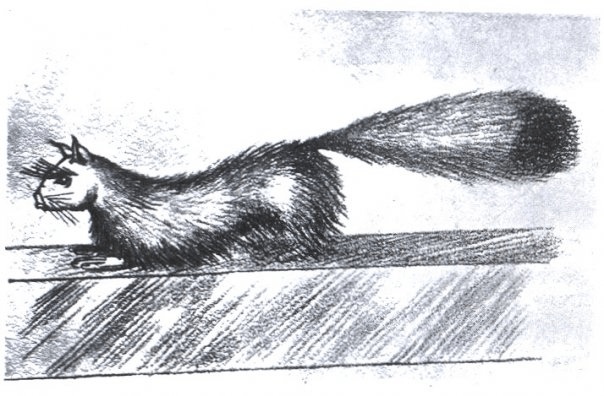
The voice claimed to belong to a small animal moving through the walls and ceilings. It said it was an “extra-clever mongoose” born in India that could speak English, read minds, and predict the future.
Gef insisted he was not a ghost, calling himself an “earthbound spirit.”
According to the Irving family, the voice soon became part of daily life. Gef talked constantly. He sang songs, told jokes, repeated gossip from nearby villages, and sometimes recited newspaper headlines before the family had read them.
Visitors reported hearing the voice too. One guest claimed a voice shouted from inside the wall, “I don’t like your face,” which remains one of the most unexpectedly human moments in the case.
A Case Taken Seriously
This was not simply a family story whispered among neighbors. Major British newspapers reported on the case. Researchers and investigators traveled to the farmhouse to examine the claims firsthand.
Members of the Society for Psychical Research — a respected organization founded in 1882 to investigate unusual phenomena — visited the home. They interviewed the family, inspected the property, and searched for signs of deception.
They never proved a hoax.
But they also never proved Gef existed.
The official conclusion was simply that the case remained unexplained.
The Behavior of Gef
Reports described a voice that could mimic animal sounds, sing nursery rhymes, and deliver weather predictions. Gef supposedly warned the family about approaching visitors and claimed knowledge of events happening miles away.
He also had a striking personality. He called himself a freak, a ghost in the form of a weasel, and “the eighth wonder of the world.” One of the most quoted lines attributed to him was, “I am funny, I am freak, I am ghost in form of mongoose.”
Whether the voice was a clever hoax, a psychological phenomenon, or something stranger, it displayed humor, mood, and strong opinions.
The Quiet Ending
By the mid-1930s, the family moved away from the farmhouse. Reports of Gef faded. There was no dramatic finale, no confession, and no clear solution.
Just silence.
Investigators remained divided. Some believed the story was an elaborate family hoax. Others suspected the daughter may have unconsciously produced the voice. A few admitted they could not explain what they experienced.
The case remains one of the strangest documented paranormal investigations ever recorded.
Why Stories Like This Matter
We tend to imagine mystery in castles, forests, or abandoned hospitals. But history suggests something far more unsettling: mystery prefers kitchens, hallways, and quiet streets.
The ordinary places we think we understand.
The unease in stories like this does not come from monsters or shadows. It comes from the possibility that the world is more complicated and surprising than we expect.
Somewhere right now, someone has a story their neighbors would never believe.
And if history is any guide, it might begin in the most ordinary house on the street.
 The ChillX Zone
Leave a comment