When Dreams Feel Real: Science, Symbols, and the Possibility of Something Greater
February 17, 2026
Some nights end with the quiet satisfaction of comfort food. A cheeseburger, fries, maybe a drink. The day feels finished, ordinary, complete.
And then sleep begins.
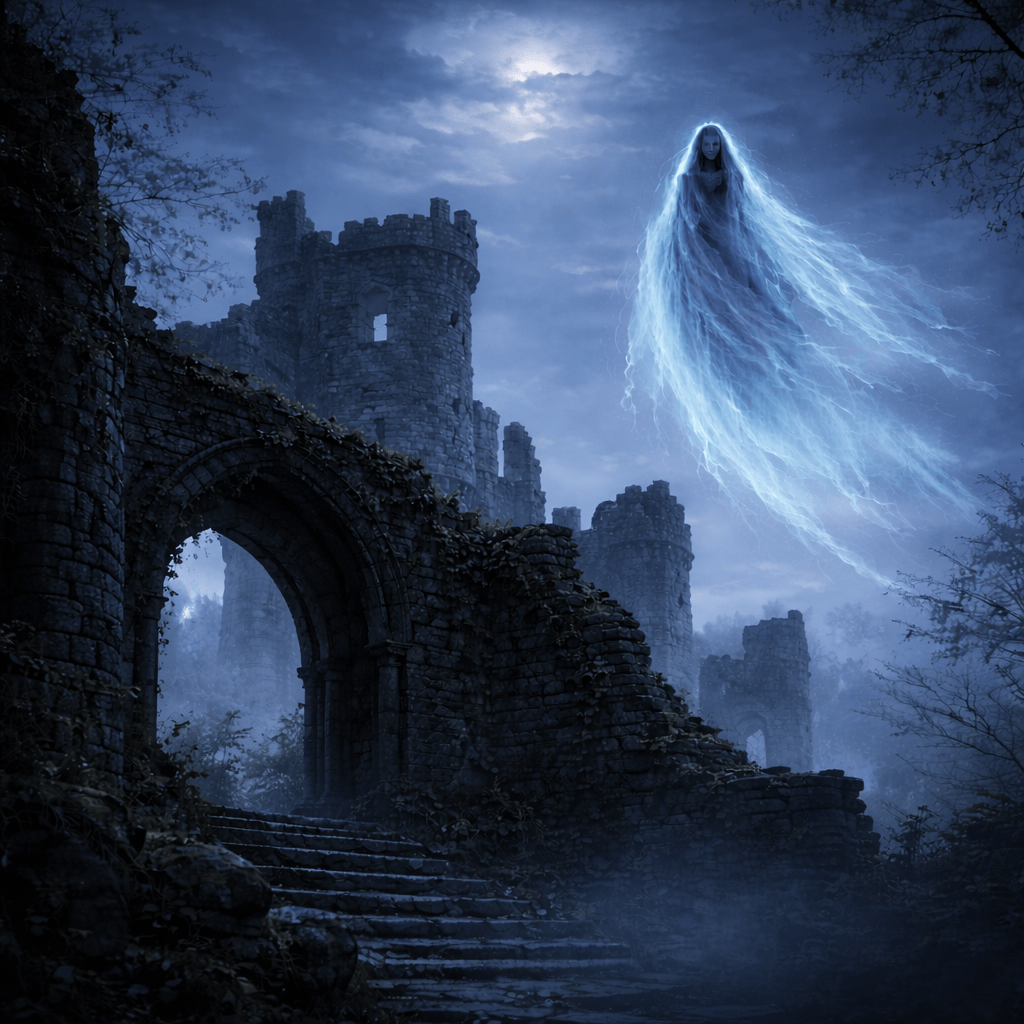
Instead of drifting into scattered memories or harmless nonsense, you find yourself standing somewhere ancient. A broken stone entrance. A half-missing wall. An arched roof suggesting a temple that once meant something to someone. The sky glows a strange shade of blue — not night, not morning, but a soft in-between twilight that feels suspended outside time.
A presence appears. Floating. Silent. Watching.
You wake with the unsettling feeling that you didn’t invent the place. You visited it.
So what actually causes dreams like this?
The Chemistry of the Dreaming Brain
Vivid dreams aren’t random accidents. They happen during REM sleep, the stage when the brain is nearly as active as when we are awake. During REM, the mind becomes a strange mix of hyper-visual, emotional, and only partially logical — the perfect conditions for experiences that feel real.
Several key brain chemicals shape this state.
Acetylcholine: the image amplifier
During REM sleep, acetylcholine levels spike. This chemical activates the visual cortex and memory centers, allowing the brain to create rich, detailed environments. Architecture, landscapes, and cinematic scenes often appear when acetylcholine activity is high.
Late meals can indirectly intensify this effect. Digestion keeps the body metabolically active, which can fragment sleep cycles and push the brain into more vivid REM periods.
Serotonin: the reality filter that turns down
Serotonin helps regulate rational thinking and emotional balance when we are awake. During REM sleep, serotonin levels drop dramatically. Without this filter, the brain becomes more open to surreal imagery and emotional symbolism. Impossible spaces suddenly feel believable.
Dopamine: the awareness spark
Dopamine influences motivation and awareness. When dopamine activity increases during REM, dreams can become lucid or hyper-real. You may feel present and conscious inside the dream world, as if you are actually standing in the environment rather than imagining it.
Melatonin: the twilight hormone
Melatonin controls the sleep cycle and darkness response. Late-night eating can delay melatonin release, shifting REM sleep closer to waking hours. This timing often creates the “blue twilight” atmosphere many people describe — dreams that occur just before waking, when consciousness begins to rise.
In short, the dreaming brain becomes a curious combination:
Highly visual. Emotionally open. Logically relaxed. Partially awake.
A perfect recipe for dream worlds that feel older, deeper, and strangely familiar.
But chemistry alone doesn’t explain why some dreams feel like places rather than stories.
Why the Brain Speaks in Symbols
Human beings rarely dream in sentences. The brain prefers images, architecture, and landscapes. Across cultures, certain symbols appear again and again in dreams and mythology.
Ruined buildings often represent the past.
Temples symbolize meaning or belief.
Hidden rooms suggest parts of ourselves we haven’t explored.
Doorways hint at change or transition.
In this light, a dream of a broken stone temple isn’t random at all. It may be the mind translating complex emotions into a language older than words.
The floating presence in the blue twilight might not be an external visitor. It could be the brain’s way of pointing toward something internal — a question not yet asked, a memory not yet processed, a chapter of life waiting to be understood.
The brain doesn’t lecture when we sleep. It tells stories in symbols.
When Dreams Cross Into Mystery
Still, there are moments when dream experiences blur into something harder to categorize.
Throughout history, people have reported recurring dreams of specific places they insist they have never seen. Some describe detailed architecture, repeating locations, and environments that feel consistent across multiple nights.
Science explains how dreams are built.
Psychology explains why they feel meaningful.
But neither fully explains why certain dream places feel persistent, almost geographic — as if the mind returns to them again and again.
This is where science ends and curiosity begins.
A Doorway, or a Metaphor?
There is a quieter possibility worth considering.
Maybe these dream locations are not destinations at all. Maybe they are metaphors — powerful ones.
A ruined castle.
A broken wall.
A hidden chamber behind a collapsed entrance.
These symbols appear in religion, mythology, literature, and art across thousands of years. Ancient places often represent the past. Temples represent purpose. Hidden rooms represent undiscovered parts of the self.
Seen this way, the dream becomes less about visiting somewhere else and more about discovering something within.
The floating presence may not be something supernatural. It may be the mind gently pointing toward change, growth, or reflection.
An unopened door.
A question waiting quietly.
A part of life not yet explored.
The Gentle Possibility
Science gives us the chemistry of dreams. Psychology gives us the language of symbols.
What remains is wonder.
Maybe vivid dreams are simply the brain processing memory and emotion in creative ways. Or maybe the boundary between imagination and perception is thinner than we think.
Either way, the next time you wake from a dream that feels like a place you’ve visited rather than a story you invented, pause before dismissing it.
The mind may not be opening a portal to another world.
Perhaps, it might be opening a doorway to a deeper understanding of this one.
 The ChillX Zone
Leave a comment