The German Tourists Who Drove Into Nowhere
February 2, 2026
Today marks the date connected to one of the most unsettling real wilderness disappearances in American history. On February 3, 1996, a German family entered one of the most hostile landscapes on Earth and vanished in a way that still troubles investigators decades later.
The case is real.
The evidence exists.
And the behavior defies normal survival logic.
A Simple Detour That Became Fatal
Helge and Erika K. were experienced international travelers. They were not reckless thrill-seekers or survival novices. Traveling with their 11-year-old son, they were touring the American Southwest in a rented minivan, following established routes and maps.
On February 3, they left the paved highway and drove into a remote area of Death Valley National Park, likely attempting a shortcut indicated on their map.
They never came back.
No emergency call was made.
No distress signal was sent.
No note explaining their decision was ever found.
The van simply vanished into the desert.
The Vehicle Found Where No One Should Be
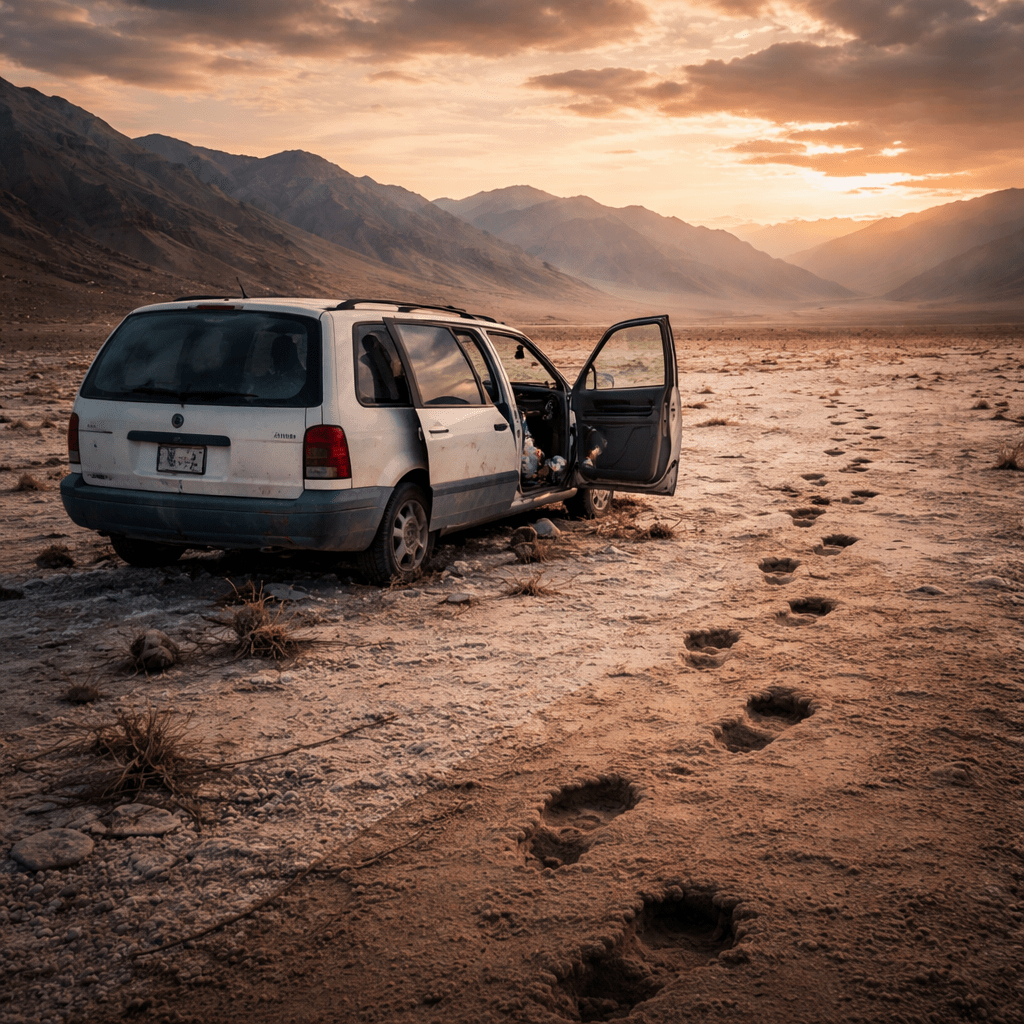
Months later, searchers discovered the minivan abandoned deep in the desert, far from any safe roadway. The vehicle was stuck in sand but otherwise intact. It had not crashed. It had not burned.
Inside were personal belongings and supplies.
Investigators believe the family made the decision to leave the vehicle and attempt to walk out.
That decision sealed their fate.
In Death Valley, distance is deceptive. Daytime heat overwhelms the body. At night, temperatures drop sharply. The landscape offers long sightlines but no shelter, no water, and no clear sense of scale.
What looks close can be hours away.
Footsteps Into Nothing
Human remains were later found scattered across the desert terrain. The father’s bones were located far from the vehicle, suggesting he continued walking long after exhaustion should have forced him to stop.
The mother and child were found closer together.
There was no sign of violence.
No animal attack.
No evidence of a struggle.
Only the quiet record of human movement into an environment that does not forgive mistakes.
Why Investigators Still Question Their Choices
Officially, the cause of death was exposure and dehydration. But experienced search-and-rescue personnel have long noted troubling questions.
Why abandon the vehicle instead of waiting for help?
Why move farther into the desert instead of staying put?
Why separate instead of conserving strength together?
Standard survival guidance is clear: stay with your vehicle. It provides shelter, visibility, and a fixed point for rescuers.
The family did the opposite.
Nothing visibly chased them.
No storm forced them onward.
No immediate threat was documented.
Yet their actions suggest urgency.
The Psychological Trap of Vast Silence
Experts who study wilderness survival psychology describe a phenomenon where open, silent environments distort judgment. The brain convinces itself that movement equals progress and that help lies just beyond the next rise.
Survivors of desert emergencies often describe the same feeling: certainty without evidence, hope without reason.
Death Valley is especially lethal because it offers visibility without access. You can see for miles, but nothing is reachable.
Some researchers believe the mind manufactures confidence to delay panic. Others believe isolation triggers something far more primal, a drive to move even when stillness would save you.
The Lesson Written Into the Desert
Today, this case is quietly referenced in search-and-rescue training as a warning.
Do not trust shortcuts.
Do not underestimate distance.
Do not leave your vehicle.
But beneath those lessons lies a more unsettling truth.
Sometimes the environment doesn’t attack you.
Sometimes it convinces you to destroy yourself.
The Question That Remains
The desert did not force them out of the van.
No visible danger drove them forward.
Yet they walked until they could not walk anymore.
And the question still lingers today.
What made staying feel more dangerous than stepping into nothing?
 The ChillX Zone
Leave a comment