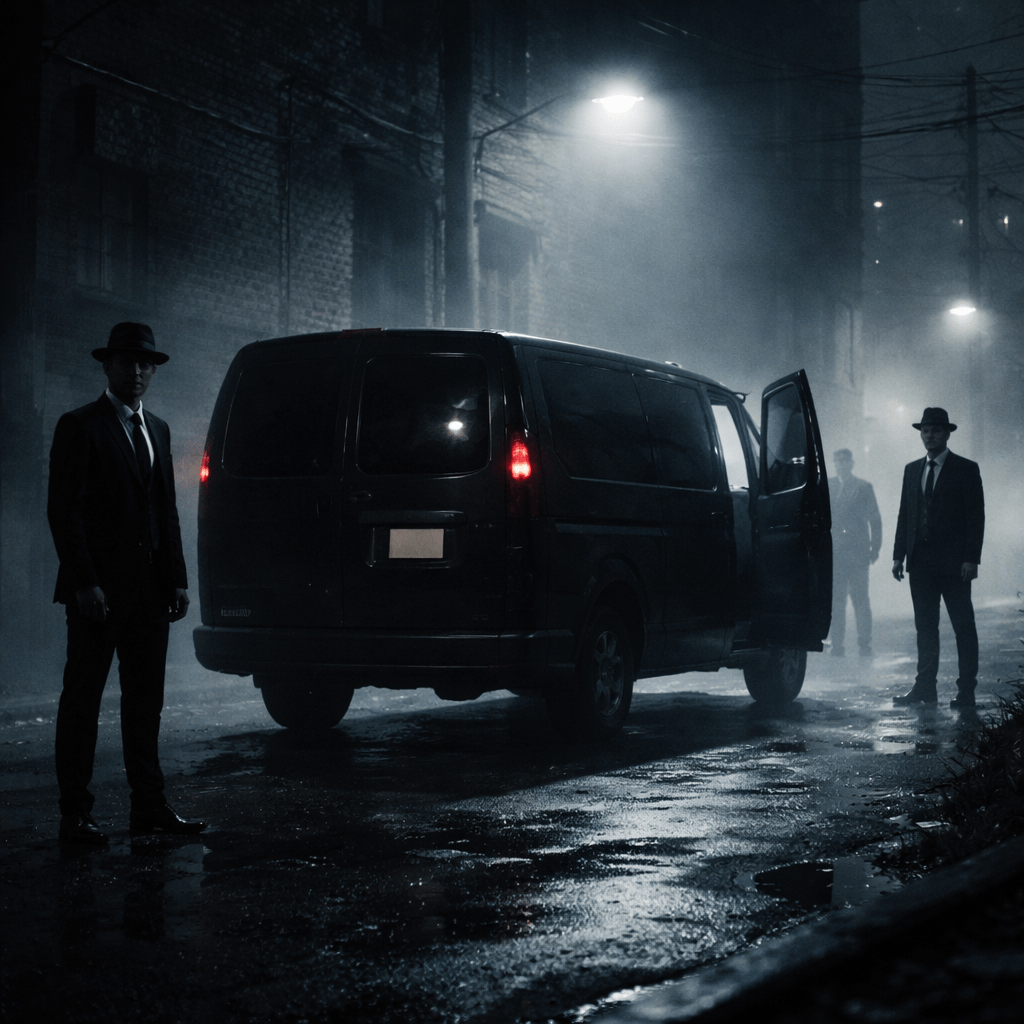
MKUltra, unmarked authority, and the origins of the Men in Black phenomenon
January 30, 2026
On January 30, 1975, the idea that the government might secretly manipulate the minds of its own citizens stopped being a fringe suspicion and became a matter of public record. In Washington, D.C., the newly formed Rockefeller Commission was quietly preparing disclosures that would soon confirm the existence of Project MKUltra, a covert CIA program involving human experimentation, psychological manipulation, and chemical mind control.
For decades, witnesses had described encounters with strange officials, unmarked authority figures, and institutional pressure following unusual experiences. Until that winter, these stories were dismissed as paranoia. On this day, history shifted. The paranoia was partially vindicated.
The Men in Black Phenomenon
The Men in Black phenomenon emerged in the mid-20th century alongside the rise of classified research, Cold War paranoia, and expanded federal authority. Witnesses consistently described figures who behaved less like investigators and more like enforcers of uncertainty—poorly socialized, emotionally flat, and fixated on discouraging further inquiry. Whether tied to UFO reports, activist movements, or unexplained encounters, these visits rarely produced answers. Instead, they produced silence. The consistency of these accounts suggests not a single organization, but a pattern: authority deployed in plain clothes, designed to unsettle rather than explain.
The Program That Redefined Psychological Warfare
MKUltra was not science fiction. It was bureaucracy. Between the early 1950s and the mid-1960s, the CIA funded and conducted experiments involving LSD, hypnosis, sensory deprivation, electroshock, isolation, and psychological stress—often on unwitting subjects. Some participants were prisoners. Others were patients. Some were simply people who trusted the wrong institution.
By 1975, investigators confirmed that records had been intentionally destroyed. What survived suggested a program less about mind control and more about mind destabilization. The goal wasn’t obedience. It was confusion—breaking perception, inducing dissociation, and testing how easily reality itself could be bent.
Unmarked Vans and the Power of Implied Authority
Throughout the 1960s and 1970s, reports accumulated of individuals being visited after UFO sightings, anti-war activism, or public whistleblowing. These visitors often arrived in unmarked vehicles, identified themselves vaguely, and framed their presence as “for your own safety.”
No threats were necessary. The authority was implied.
MKUltra demonstrated that psychological intimidation works best when it feels administrative rather than violent. A clipboard is more unsettling than a weapon. A calm tone is more effective than force. The Men in Black phenomenon—long assumed to be extraterrestrial—may instead represent human systems learning how to weaponize uncertainty.
Public Safety or Psychological Containment?
One of the most disturbing lessons of MKUltra was how easily ethical boundaries dissolved under the banner of national security. Experiments were justified as preventive measures. Subjects were told their suffering served a greater good. The language mirrors modern explanations for surveillance, emergency powers, and rapid-response authority.
From a paranormal perspective, this raises a question that refuses to go away: when people report being silenced, monitored, or destabilized after extraordinary experiences, are they describing something external—or something induced?
A manipulated mind can manifest fear as reality. But that does not make the fear unreal.
Where the Paranormal Still Fits
The revelation of MKUltra does not debunk paranormal encounters. It complicates them. If perception can be altered chemically or psychologically, then witnesses may genuinely experience impossible events while still being victims of human intervention.
In that sense, the Men in Black do not need to be supernatural. They only need access, authority, and plausible deniability.
January 30 and the End of Innocence
On January 30, 1975, the U.S. government acknowledged that it had crossed into the human psyche without consent. The mythic figure in the black suit did not disappear after that moment. He became harder to distinguish from reality.
Credit Where Credit Is Due
This article draws on publicly acknowledged findings of the Rockefeller Commission (1975), investigative reporting by Seymour M. Hersh, and testimony later expanded during the Church Committee hearings. Cultural analysis of Men in Black phenomena is influenced by the work of John A. Keel and later declassified intelligence reviews.
After January 30, 1975, the question was no longer whether the Men in Black existed, but whether we had already mistaken them for something normal.
 The ChillX Zone
Leave a comment