The Trek That Became a Warning
January 27, 2026
Every year, January 27 arrives like a quiet doorway.
The holidays are long gone. Winter is settled in. The world feels hushed—like it’s holding its breath. And for people who track strange stories, this date has an eerie echo: January 27 is the day a group of seasoned hikers walked into deep wilderness… and the wilderness never gave them back in any ordinary way.
They weren’t amateurs. They weren’t reckless teenagers playing at adventure. They were trained, experienced, and prepared—people who understood cold, terrain, and survival.
They had names. Journals. Plans.
And then the woods did what the woods sometimes do in our oldest legends:
It pulled.
The First Tug: “Just One More Mile”
It always starts gently.
A trail feels normal—until it doesn’t.
The air changes first. Not dramatically… just enough to notice. Sound thins out. The wind shifts. Your instincts tighten as if something unseen has stepped closer. Later, people explain it away as nerves, darkness, isolation.
But those who’ve felt it describe the same thing:
A pressure—like the forest has a gravity of its own.
You don’t sprint into the trees. You drift. You follow a sound. You go around a bend. You try to “get a better look.”
And suddenly you’re deeper than you meant to be.
The Dyatlov Pattern
The reason Dyatlov keeps haunting the paranormal world isn’t just that people died in winter. Tragedy happens.
It’s how it happened.
In the versions whispered around campfires and late-night forums, it reads like this:
- A group makes camp in punishing wilderness.
- Something disturbs the night—something urgent enough that they flee their shelter.
- They move into the dark in a way that doesn’t match rational survival.
- Some are found scattered, as if the mountain itself rearranged them.
Even if you lean skeptical, the shape of the story matches the oldest fear humans have about forests and wild places:
That there are moments when nature stops being scenery and becomes a decision-maker.
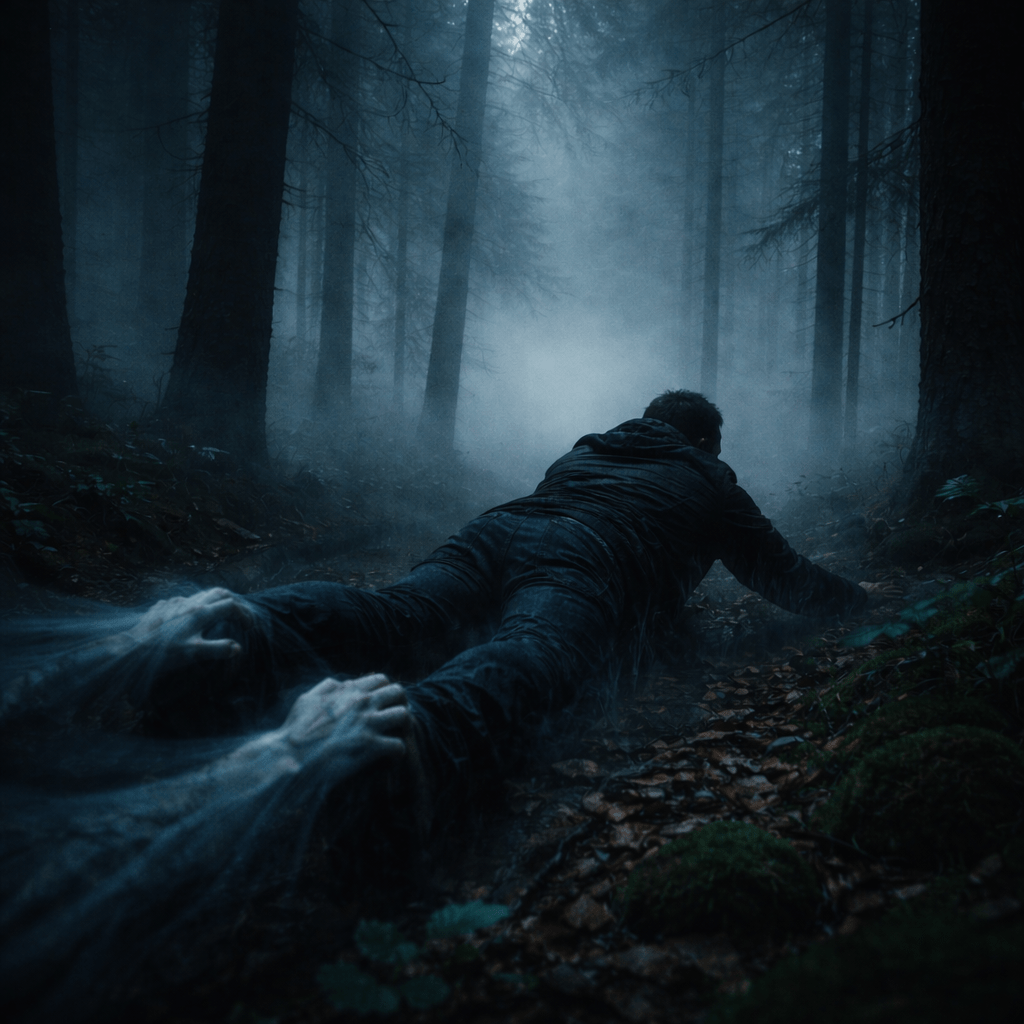
“Dragged” Doesn’t Always Mean Hands
When people say “dragged into the woods,” they imagine claws, a shadowy figure, something with muscle and intent.
But “dragged” can be quieter than that.
Dragged can mean:
- A sudden panic that makes you run the wrong direction.
- A confusion so thick you forget what you know.
- A sound that feels personal—like it was meant for you.
- A certainty, irrational and powerful, that you must go away from safety.
Dragged can also be the pull of weather, terrain, and time—the cold that pushes you to make one bad choice, then another, until the woods are no longer outside you… but inside you.
And once the woods are inside you, the trail is gone.
The January 27 Rule
If there’s a rule to stories like this, it’s the one the old-timers say without superstition, like they’re talking about ice thickness:
Late January doesn’t forgive mistakes.
But paranormal folklore adds a second rule:
Late January doesn’t forgive attention.
Because sometimes the woods feel like they’re listening back.
And if you’re the kind of person who goes searching for the strange—if you go out hoping to feel something unseen—
be careful what you teach your instincts to recognize.
Because once your body learns that feeling—
that “someone is behind me,”
that “I shouldn’t be here,”
that “the trees are too quiet”—
the woods don’t have to chase you.
They just have to wait for you to step off the path one time.
A Closing Thought for Tonight
If you’re reading this on January 27, here’s a small ritual that costs nothing:
Before you walk near the tree line, pause.
Look at the woods like you’re looking at a crowd.
Not because every forest is haunted—
but because every forest is ancient.
And ancient places don’t always react kindly
to being treated like background.
 The ChillX Zone
Leave a comment