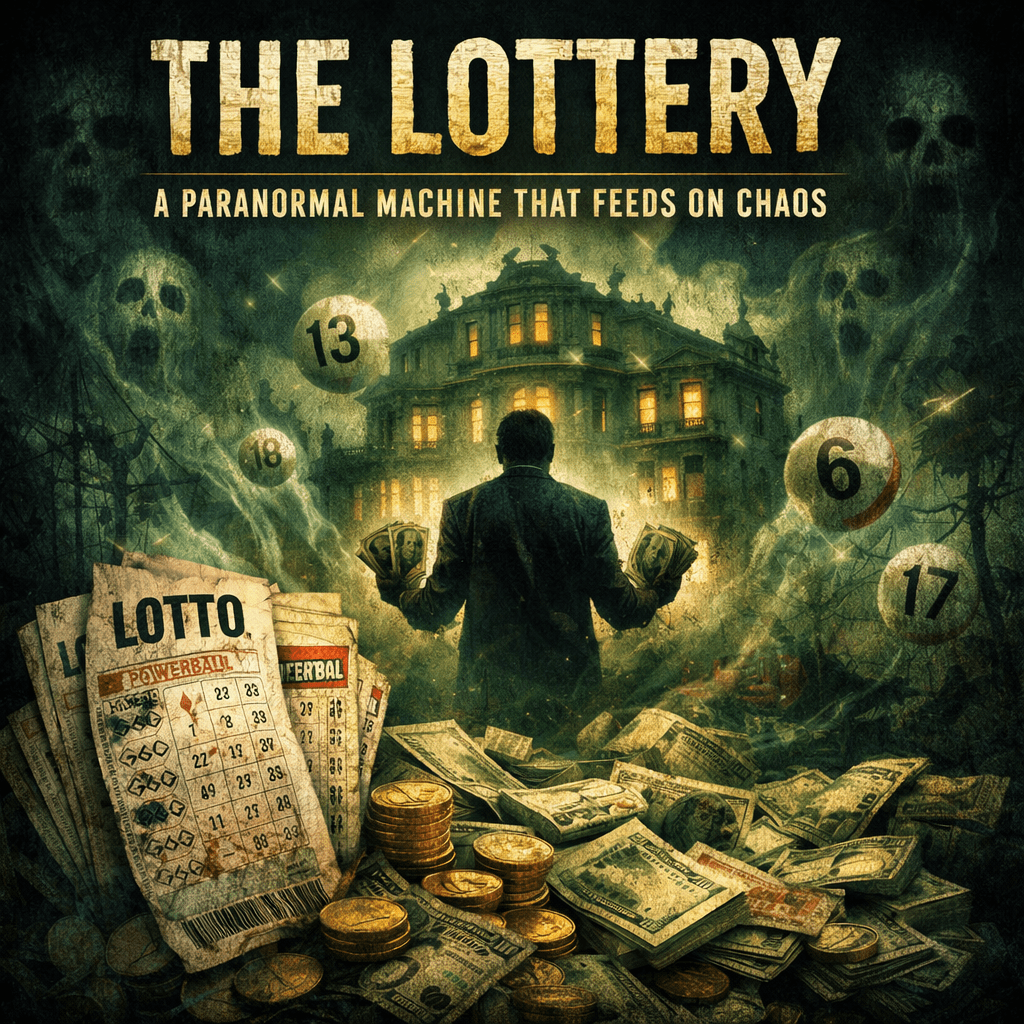
When Probability Becomes Possession
January 26, 2026
The lottery is sold as harmless entertainment, but behavioral science tells a different story. It operates as a mass psychological anomaly — a system that overrides rational thought, distorts democratic incentives, and rewards chaos over merit.
In paranormal research, an anomaly is a phenomenon that consistently violates expected human behavior. By that definition, the lottery qualifies.
The Science of Irrational Belief
Lottery participation is statistically irrational. Expected value is deeply negative, yet participation is highest among economically vulnerable populations. This is explained by probability neglect — a cognitive bias where emotional imagery overwhelms logic.
Neurologically, anticipation of winning triggers dopamine responses similar to addiction. The brain reacts more strongly to the possibility of escape than to realistic outcomes. Repeated losses do not weaken belief; they reinforce it.
This is not free choice. It is neurological capture.
When Winning Becomes Destructive
Sudden Wealth Syndrome is a documented psychological condition. Many lottery winners experience depression, paranoia, addiction, and eventual financial collapse.
Jack Whittaker, a major Powerball winner, lost his fortune, family, and stability. He later said he wished he had destroyed the ticket.
In paranormal terms, this mirrors classic anomaly exposure: contact with a force that overwhelms human limits and leads to breakdown.
The Birth of a Statistical Aristocracy
Democracy depends on shared incentives — work, education, contribution. The lottery creates a superclass elevated by randomness, not merit.
These individuals gain power without responsibility, wealth without contribution, and influence without accountability. This resembles pre-democratic aristocracy, not a healthy market system.
When chance replaces effort, expertise loses legitimacy.
Degrees Without Destiny
As governments promote lotteries while failing to provide meaningful employment, a moral contradiction emerges. Education promises mobility, but the system rewards randomness instead.
This produces anomie — the breakdown of social meaning. People stop believing in work and begin believing in chance.
In paranormal language, this is a cultural haunting: institutions exist, but their purpose is hollow.
Why the Lottery Is Morally Corrupt
Evil is not supernatural. It is structural.
The lottery is morally corrupt because it extracts wealth regressively, exploits cognitive bias, undermines rational agency, and monetizes desperation.
Unlike private gambling, it is state-sanctioned hope extraction.
That makes it predatory.
The Paranormal Reality
The lottery does not need ghosts or demons. It behaves like a paranormal system because it feeds on belief, ritual, and irrational hope.
Numbers are repeated like spells. Drawings become ceremonies. Loss is normalized. Ruin is invisible.
The system survives because people believe.
Conclusion
The lottery is not paranormal because it defies physics.
It is paranormal because it defies reason at scale.
It is a quiet haunting embedded in modern democracy — and the damage is real.
 The ChillX Zone
Leave a comment