A Former Adult Industry Performer’s Account of Psychological Harm and Paranormal Phenomena
January 22, 2026
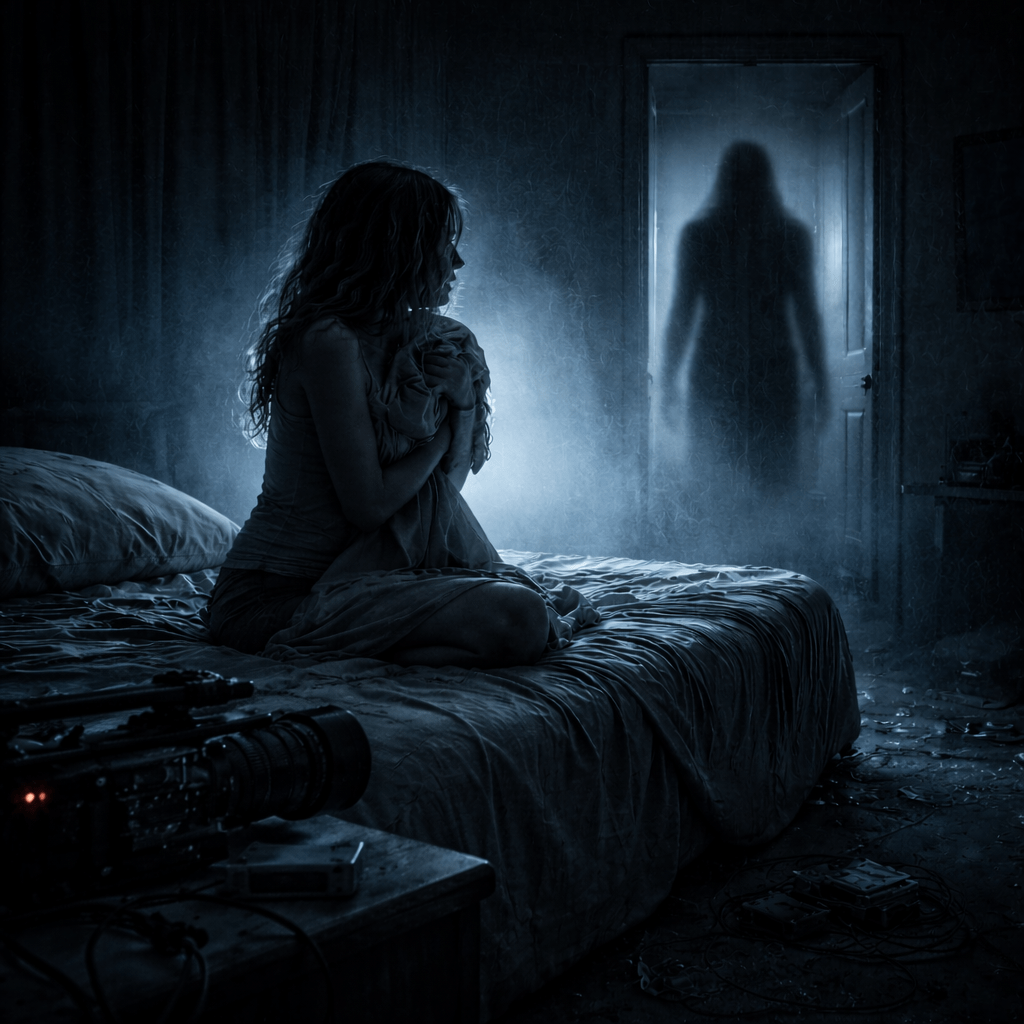
In the early 2000s, a former adult film performer publicly described a disturbing experience that occurred after leaving the industry. According to her account, she began experiencing persistent night terrors, sleep paralysis, and the sensation of being watched—always accompanied by vivid imagery tied to scenes she had filmed years earlier.
What made the case unusual was its consistency. The episodes occurred at the same hour each night. The same visual patterns repeated. And the experiences intensified whenever archived footage resurfaced online—despite her no longer being involved in the industry.
Mental health professionals acknowledged trauma and dissociation as likely contributors. Yet the symptoms did not respond to conventional treatment alone.
When Trauma Takes on a Shape
Paranormal researchers who later examined the case noted similarities to classic “attachment” phenomena described in folklore—where repeated exposure, fixation, and emotional fragmentation were believed to leave an imprint that lingers beyond the original act.
The performer herself described it not as guilt or fear, but as a sense of being split—as if parts of her identity never fully returned.
A Brief Look at the Industry’s Risk
While the adult industry presents itself as controlled and consensual, long-term psychological harm is well documented among former participants and heavy consumers alike. Common patterns include dissociation, anxiety, intimacy disorders, and identity erosion.
What is rarely discussed is how repetition and mass consumption amplify these effects—turning human intimacy into a product endlessly replayed, detached from the people involved.
Entertainment, Subversion, and Desensitization
The same mechanisms now appear across mainstream entertainment: increasingly explicit imagery, shock as a substitute for meaning, and normalization through constant exposure. Cultural analysts note that when boundaries dissolve in media, audiences often experience numbness rather than liberation.
In older belief systems, this numbness was considered dangerous—not because of morality, but because it weakened perception.
The Paranormal Interpretation
Across traditions, there is a recurring warning: some things take shape through attention alone. Not monsters, but patterns—obsessions that feed on repetition and emotional detachment.
In this view, the incident surrounding January 22 is not about punishment or possession, but residue. What remains when something deeply personal is endlessly consumed by strangers.
Why January 22 Matters
This date stands as a reminder that not all hauntings involve places. Some attach to images, memories, and systems that never truly shut off.
The danger isn’t desire.
It’s what happens when intimacy becomes endless footage—and no one is allowed to leave it behind.
 The ChillX Zone
Leave a comment