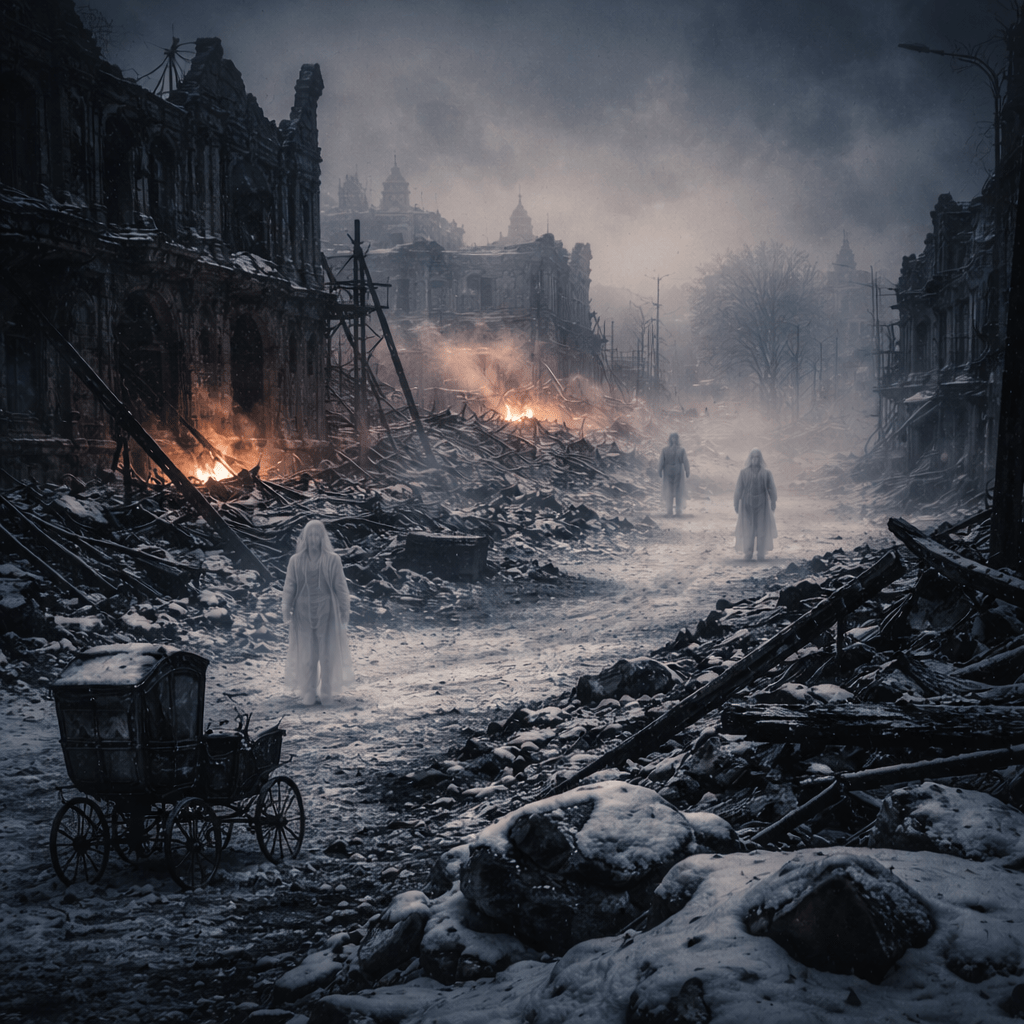
When a City Destroyed Began to Whisper Back
January 5, 2026
By January 5, 1918, the city of Halifax was still struggling to survive the aftermath of the Halifax Explosion, the largest man-made explosion before the atomic age. On December 6, 1917, a collision between two ships in the harbor triggered a blast that killed nearly 2,000 people, injured over 9,000, and leveled entire neighborhoods.
Nearly a month later, the dead were buried, the wounded still filled hospitals, and winter had sealed the ruins under snow and ice. That was when something else began to be reported.
The First Unsettling Accounts
As relief workers and soldiers continued patrols into early January—including January 5—multiple witnesses described phenomena that could not be easily dismissed as shock alone. Reports included footsteps crunching through snow in abandoned districts, voices calling for help from collapsed buildings already searched and cleared, and shadowy figures seen standing in streets that no longer existed.
Several guards claimed they encountered people who appeared injured and disoriented, only for them to vanish when approached. In more than one case, search teams were dispatched to locations where no living person could be found.
Hospitals That Would Not Sleep
Temporary hospitals set up after the explosion became the focus of the most disturbing reports. Nurses wrote of bedsheets tugged in the night, bells ringing without anyone pulling them, and patients insisting someone had sat beside them moments before staff arrived. Some survivors claimed they recognized these visitors as relatives who had died in the blast.
By early January, staff shortages were worsened when several nurses requested reassignment after repeated night disturbances.
Why January 5 Matters
January 5 marked the point when Halifax had moved beyond emergency response and into grim recovery. The fires were out. The wounded were counted. The dead were named. Yet the reports continued—not during the chaos of disaster, but during the quiet that followed.
That timing is what made the stories endure. There was no benefit to exaggeration, no audience for ghost tales, only exhausted people trying to rebuild a shattered city.
Trauma, Memory, or Something Else
Historians suggest mass trauma, sleep deprivation, and grief as explanations. Others note the consistency of reports across unrelated witnesses, many of whom did not know one another and recorded their experiences privately in letters and journals.
To this day, parts of Halifax associated with the blast remain among the most frequently cited locations for unexplained encounters in Atlantic Canada.
 The ChillX Zone
Leave a comment