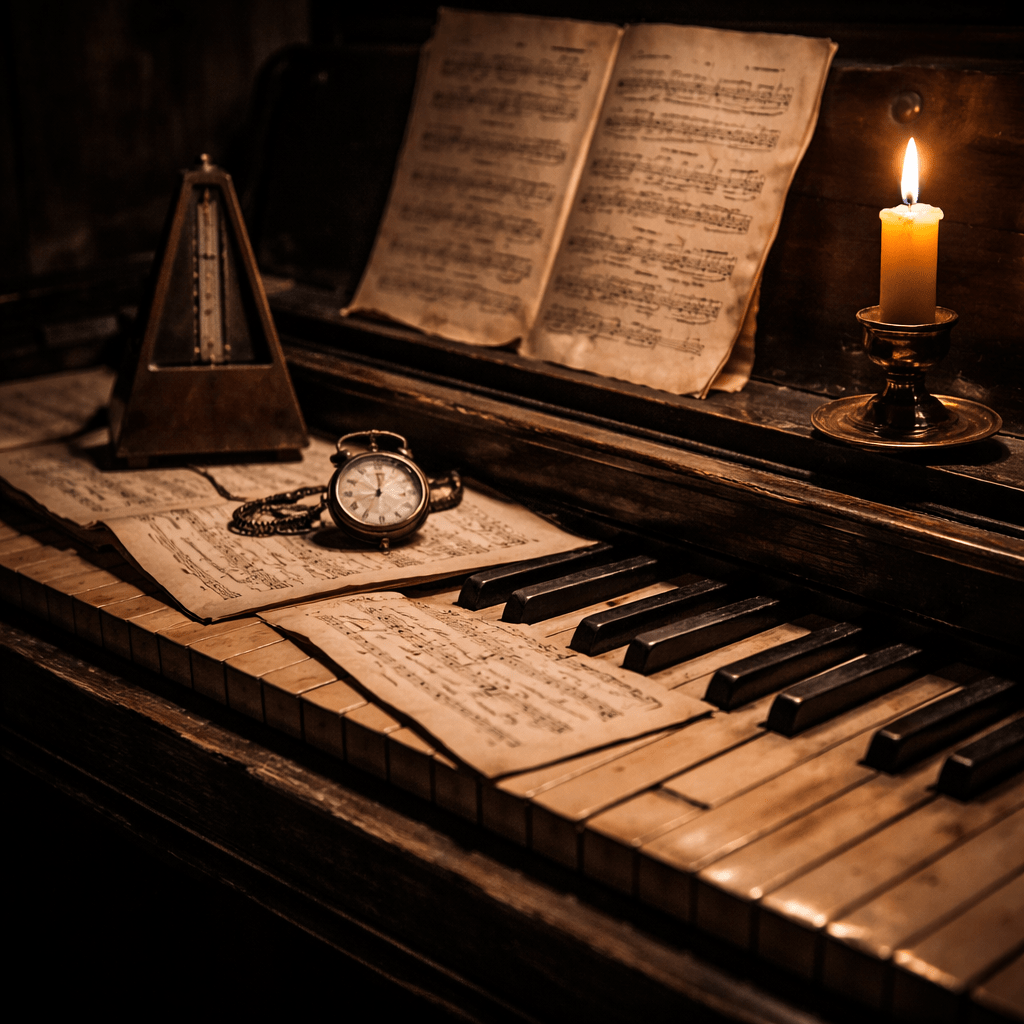
When Sound Becomes a Warning
January 3, 2026
Across multiple decades, January 3 has surfaced repeatedly in paranormal case files as a date tied not to sightings or symbols—but to music. Not melodies meant to entertain, but sound that intrudes, repeats, and lingers long after it should have ceased.
Researchers now refer to this phenomenon as The January 3rd Musical Curse.
The Incident That Defined the Pattern
On January 3, 1979, residents of a small apartment block in Leiden, Netherlands, reported hearing a faint piano melody echoing through the building shortly after midnight. The tune was slow, unresolved, and unfamiliar.
The problem:
The building had no piano.
Multiple tenants described the same sequence of notes, repeating every 13 minutes, always stopping mid-phrase. Police were called after residents began reporting nausea, headaches, and an intense sense of dread.
When authorities inspected the building, they traced the sound to a sealed maintenance room that had been closed since the 1950s. Inside, they found only dust, exposed pipes, and an old scorch mark on the floor.
No instrument.
No speakers.
No explanation.
At 3:03 a.m., the music stopped.
The Composer Who Vanished
Archival digging revealed something stranger.
The melody matched fragments of an unfinished composition written by a little-known conservatory student who disappeared in 1903—also on January 3. His notes described the piece as “a sequence that resolves only if played in full.”
The final page of the manuscript was missing.
The composer’s last journal entry read:
“If it stops early, it does not forgive.”
The Effects
Those exposed to the melody for extended periods reported:
- Persistent ear ringing weeks later
- Involuntary humming of the tune without remembering hearing it
- Nightmares involving metronomes, ticking clocks, or endless hallways
One witness claimed that whenever he tried to finish the melody on a piano, the final note would not sound, no matter the instrument.
Other January 3 Occurrences
Over time, similar reports emerged:
- 1946, Prague – a radio broadcast briefly aired an unknown waltz before cutting to silence; the recording was later missing from archives.
- 1988, Chicago – a school music room alarm triggered repeatedly at night; motion sensors showed nothing, but audio logs recorded a looping violin phrase.
- 2004, Tokyo – commuters reported hearing faint music on a closed subway platform; CCTV showed people stopping, listening, then abruptly leaving.
In every case:
- The date was January 3
- The music stopped abruptly
- No complete recording survived
Why January 3?
Paranormal analysts propose that January 3 represents a threshold date—a point where repetition overtakes resolution.
Music, unlike symbols or words, bypasses rational filters. It embeds itself directly into memory, emotion, and pattern recognition. A cursed melody does not need belief—it only needs exposure.
Some theorists believe January 3 is when unfinished things attempt to complete themselves.
The Curse Theory
According to the dominant theory:
- The music is not haunting a place
- It is searching for an ending
Each playback weakens the barrier between intention and manifestation. The curse is not death—but recurrence. A loop that refuses closure.
The danger lies not in hearing the melody, but in attempting to finish it.
Final Note
No full version of the composition has ever been recovered.
Audio files corrupt.
Written scores blur or vanish.
Witnesses disagree on the final bars.
Yet musicians continue to report waking on January 3 with a melody in their head they cannot write down—only recognize.
Perhaps the curse is simple.
Some things were never meant to resolve.
And January 3 is when they remind us.
 The ChillX Zone
Leave a comment