Miranda Cosgrove’s Night of the Frozen Hour and the Question No One Can Answer—Dream, Brain, or Something Else?
December 26, 2025
Back in the 90s, when television antennas still bent crooked on rooftops and late-night radio whispered ghost stories across AM frequencies, sleep paralysis wasn’t discussed like a medical condition. It was a quiet terror people shared only with those who wouldn’t laugh at them. And when actress Miranda Cosgrove described her own experience—waking up unable to speak or move, trapped between dreaming and waking—it echoed every chilling report that has crossed a newsroom desk since the days of VHS tapes and cigarette-smoked radio booths.
She said her eyes were open. She said the room was real.
She said she couldn’t move.
That’s where science ends—and something else begins.
A Night You Don’t Fully Wake Up From
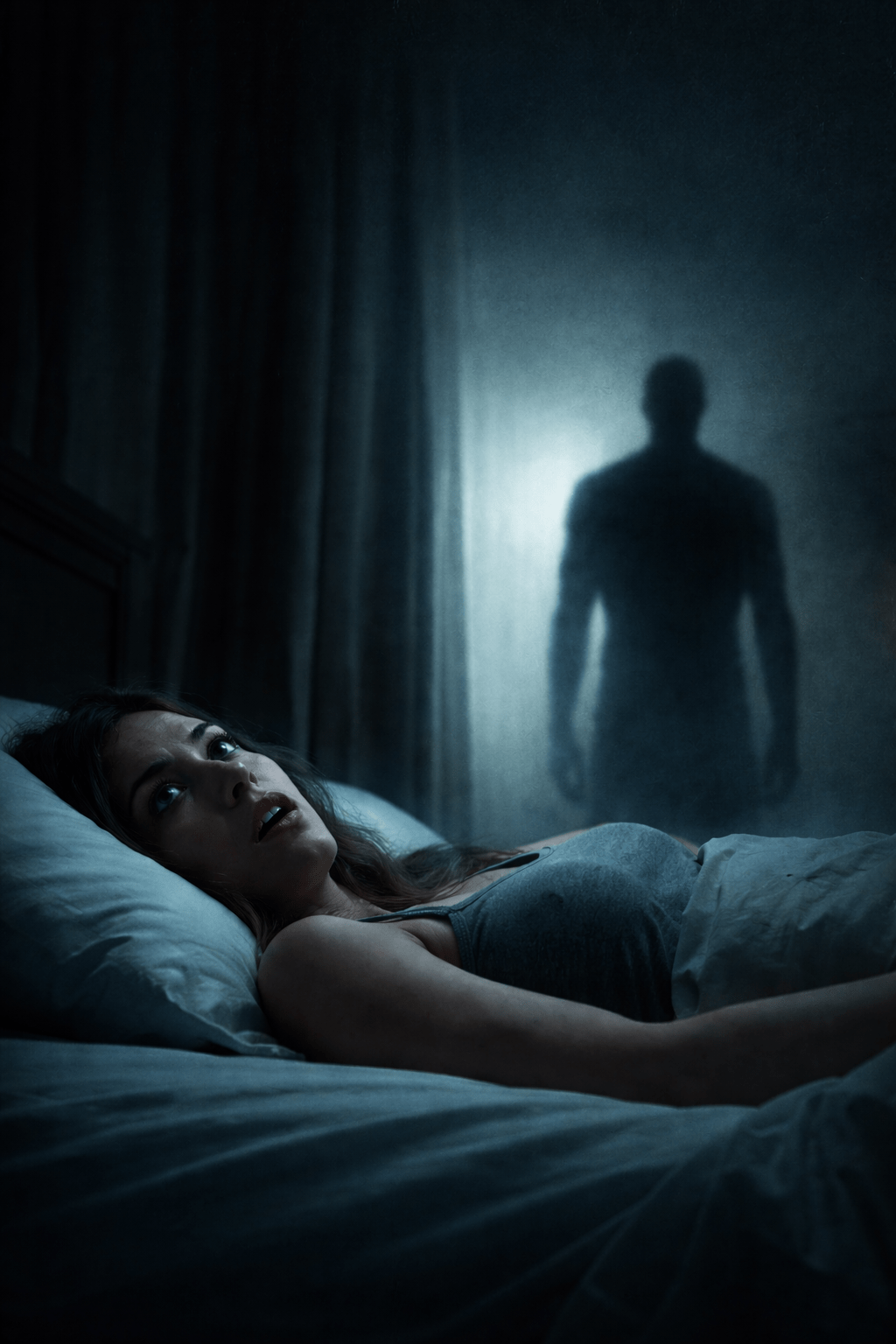
Miranda described the classic moment—conscious, aware, and pinned in place. The type of moment where the ceiling feels too close, the air feels wrong, and the room hums with a presence that isn’t supposed to be there. In the 90s, folks didn’t call that a sleep disorder. They called it a visitor.
People who’ve lived this don’t talk in medical terms. They talk like survivors. They describe:
- A heavy pressure on the chest like a shape leaning close
- The sense of someone standing at the end of the bed
- The feeling of being watched by eyes that weren’t visible, but undeniably there
- The room unchanged, but the atmosphere wrong, like reality was glitching
Miranda’s account matches the same pattern thousands quietly confessed in late-night interviews: the body locked, the mind awake, and an unseen presence observing from the dark.
When the Bedroom Becomes a Threshold
There’s a belief—older than science and too stubborn to die—that sleep paralysis happens at the edge of something. Not a dream, not a hallucination, but a threshold. A doorway moment where the body is asleep, the spirit is awake, and something else is permitted to look back.
Cultures have different names for whatever visits in that moment.
In the 90s paranormal circuit, we just called them shadows.
They’re seen without detail but with certainty. No face, no form, just an outline and a will. Hundreds described the same shape: tall, still, waiting. Some say it doesn’t move. It doesn’t need to. Being seen is enough.
Not a Dream. Not a Hallucination. A Witness.
Miranda’s experience stands out because she didn’t describe a nightmare. She described an environment that remained exactly as it was—the room unchanged, the body real, the moment grounded. The paranormal community has a rule of thumb:
If the room changes, it was a dream.
If the room stays the same, something else was there.
Most scientists will dismiss that claim.
Most experiencers will die on that hill.
The Final Question (And No Real Answer)
Medicine explains the paralysis.
Neurology explains the hallucination.
Fear explains the memory.
But science never explains why so many people see the same figure in the corner of the room.
And that is where Miranda’s story stops being medical and becomes paranormal—because it joins a pattern older than her, older than television, older than the idea that ghosts need proof.
Some events don’t need evidence to be real.
They only need a witness.
 The ChillX Zone
Leave a comment