A Dead Station, a Lost Voice, and the Night the Static Answered Back
December 28, 2025
On the 28th, a small town in Ohio heard a broadcast from someone who shouldn’t have been speaking anymore.
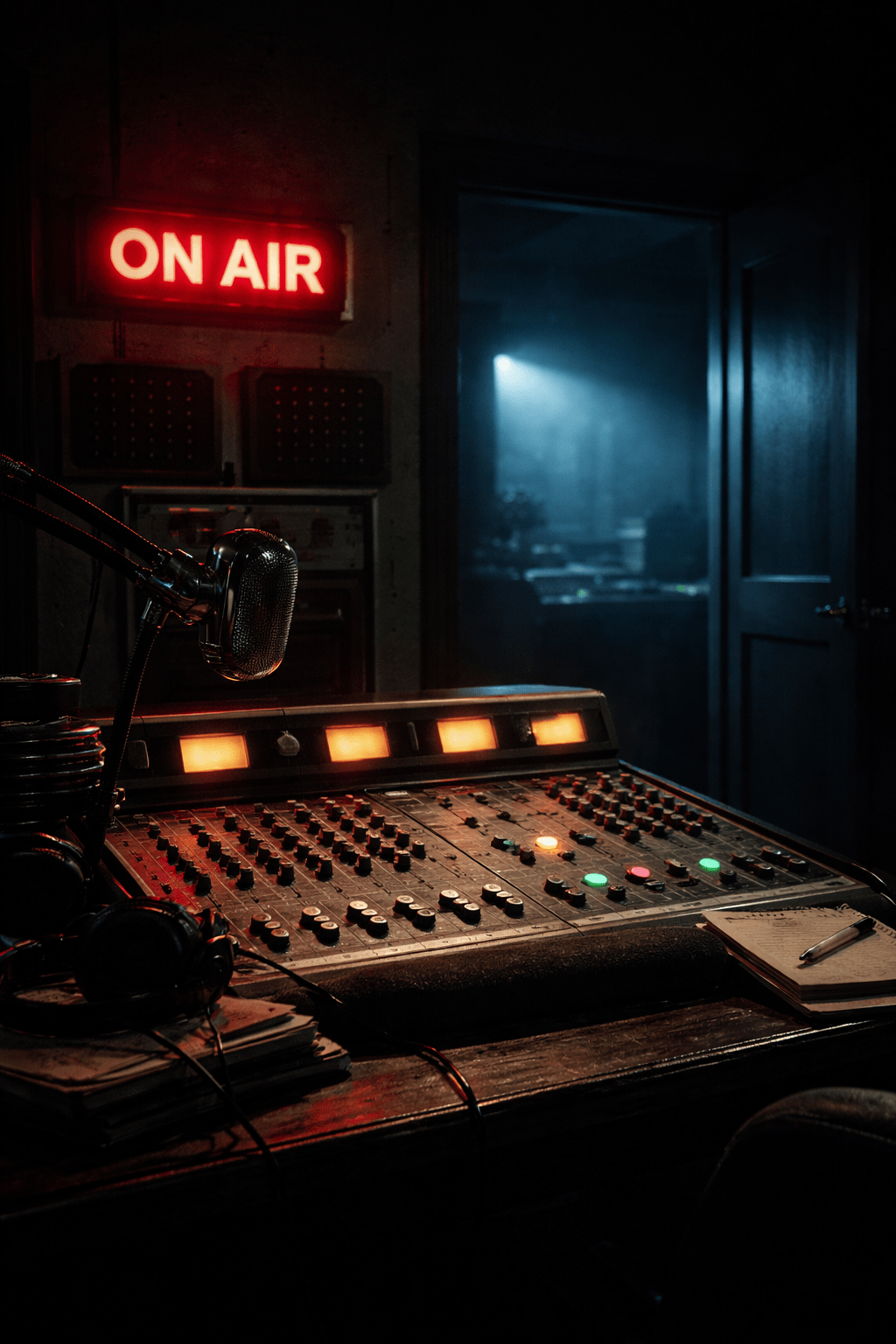
In the late 90s, radio stations were already phasing out old analog rigs, but one small-town AM broadcaster, WXBR 1310, was still running equipment older than the DJ who operated it. On the night of the 28th, the station signed off at 12:03 a.m. like it always did. Dead air. Silence. The carrier tone clicked off. The building powered down.
At 12:16, a signal came back.
The old red “LIVE” bulb lit on its own. The board powered up. And a voice began speaking, faint, like it was traveling a long way through the static. The DJ, who had already been locking up, swore he heard someone say his name, drawn-out and distorted, like it was underwater. Then the voice began reciting a weather report for a day that hadn’t happened yet.
“Light rain at dawn. Two cars at the crossing. Don’t stop.”
He said it wasn’t an announcer. It wasn’t anyone from the station. And it wasn’t on any tape.
A Voice With No Signal
Engineers inspected the equipment later and found the transmitter disconnected. Not malfunctioning—physically unplugged. No power flow. No feed to the board. But several listeners called the next morning to report they had heard the same broadcast through their own radios, as if something had pushed its way onto the frequency. The details were always the same:
A male voice.
Dust-dry tone.
Speaking a report from nowhere.
One listener claimed the voice whispered the name of a street she grew up on. Another heard a warning about a car that would never start again. None of them had their radios turned on before the transmission began.
Too Clear to Be a Mistake
Experts blamed bleed-through interference, cross-frequency overlap, or a rogue signal bouncing off atmospheric distortion. But atmospheric distortion shouldn’t know a person’s name. It shouldn’t mention a location only one listener would recognize. It shouldn’t predict rain before the clouds even arrived.
And it definitely shouldn’t say “Don’t look at the window” right before the lights in the broadcast booth went out.
The DJ refused to close alone after that night. He said he could still hear static whispering when the booth was quiet, like a voice just waiting for a frequency to open again. He said he would never forget the last line:
“You’re listening to what comes next.”
If It Happens Again
There’s a superstition now among late-night radio techs.
If the broadcast board lights up with no power, don’t answer.
If the transmitter comes online by itself, step back.
And if a voice speaks with no signal behind it, turn off the radio.
Some say the dead can’t cross into our world.
Others say they can—
they just need a clear channel.
 The ChillX Zone
Leave a comment