WHEN THE BODY MOVES WITHOUT CONSENT
December 20, 2025
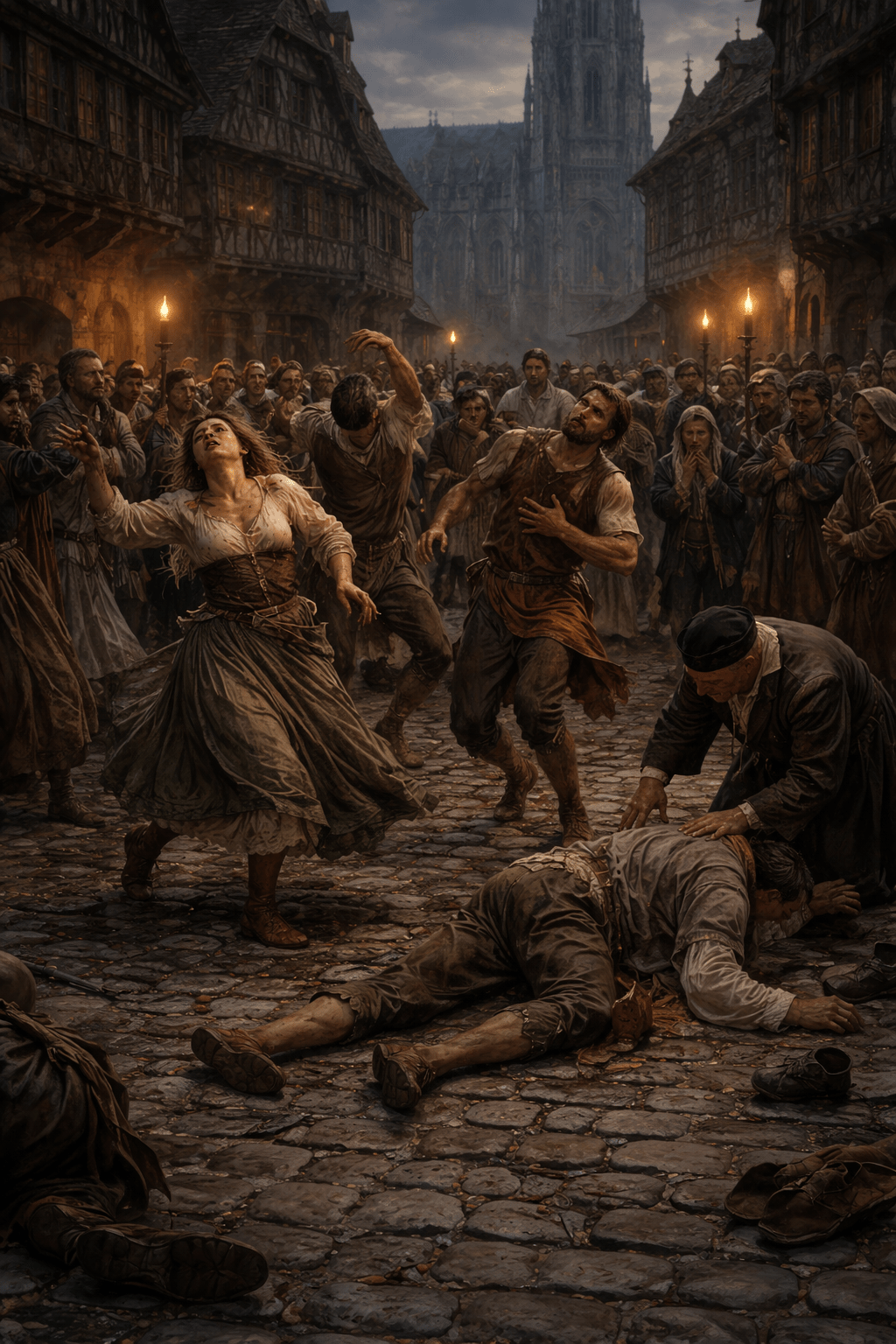
The events took place in Strasbourg, a walled city along the Rhine, then part of the Holy Roman Empire. In the winter of 1518, its streets, markets, and public squares became the stage for one of the most disturbing episodes in recorded history.
What began as a single person moving uncontrollably soon spread through neighborhoods and into the city center, until authorities realized they were no longer dealing with celebration, protest, or ritual.
They were dealing with something dangerous.
WHEN THE BODY MOVED WITHOUT CONSENT
Residents began dancing without music and without rest. Not for minutes, but for hours. Not for hours, but for days. Witnesses described bodies jerking into motion, feet pounding stone streets until skin split and bones fractured.
Some screamed that they were being forced to move. Others begged to be restrained. When restrained, they resumed dancing the moment they were released.
By mid-December, people were collapsing from exhaustion. By late December, some were dying.
WHAT OFFICIALS AND WITNESSES RECORDED
Physicians, clergy, and city leaders documented the same details independently: rapid onset, uncontrollable movement, extreme physical stress, and no clear cause. There was no fever spreading through the city. No known poison identified. No enemy action.
The afflicted injured themselves and others as crowds gathered. Panic grew. The streets became hazardous simply because of proximity to those who could not stop moving.
Deaths were recorded from heart failure, stroke, and physical trauma.
WHY DECEMBER 20 MARKED A TURNING POINT
On or around December 20, Strasbourg’s leaders abandoned earlier responses and treated the outbreak as a public safety emergency. Music was banned. Public dancing spaces were closed. Victims were removed from the city and isolated outside its walls.
Only after separation did the outbreak begin to subside.
What never subsided was the question of why it happened at all.
WHAT WAS NEVER EXPLAINED
Modern theories range from mass psychological illness to toxic contamination from ergot fungus. None account for every symptom recorded, nor the sudden spread, nor the uniformity of witness descriptions across social classes.
What is indisputable is this: hundreds were affected, many were injured, and people died in Dancing Plague of 1518.
No final explanation has ever been agreed upon.
WHY THE WARNING STILL APPLIES
The lesson of Strasbourg is not about superstition. It is about humility. About recognizing that human bodies and minds can become dangerous when driven by forces not yet understood.
Some hazards are mechanical. Others are environmental. And some sit at the edge of explanation, where the consequences arrive long before understanding does.
In 1518, people danced until they collapsed.
On December 20, the city learned that even movement itself can become a threat—and that some warnings only reveal themselves after harm has already begun.
 The ChillX Zone
Leave a comment