A Nation Built on Standards That Few Were Ever Meant to Meet
December 13, 2025
On December 13, 1790, the United States quietly established one of its first national definitions of belonging. The Naturalization Act, passed that winter, limited citizenship to “free white persons of good character.” It was a legal sentence that carried an invisible message: Americanness was conditional, and most would fail to qualify.
More than two centuries later, the language has changed. The requirements have not.
The Ever-Moving Line
To be an American, one must work relentlessly—but not complain. Speak freely—but not disrupt. Believe in the system—but never question its outcomes. Assimilate—but never forget your origins. Remember history—but only certain versions of it.
These expectations are rarely written down. Yet they are enforced socially, economically, and sometimes violently. Those who fall outside the invisible margins are told they simply didn’t try hard enough.
The contradiction is permanent. The standard keeps moving.
December 13 and the Weight of Judgment
December 13 is also associated with legal finality—sentencing dates, deportation rulings, and administrative closures have historically clustered near year’s end, when systems rush to “resolve” cases before calendars reset. For many immigrants, dissidents, and marginalized citizens, December has marked not celebration but erasure.
Court records show countless decisions finalized just before the holidays, when appeals are harder, offices close, and attention fades. Citizenship denied. Benefits revoked. Status changed with a stamp.
Lives altered quietly.
When the Buildings Don’t Feel Empty
In government offices long after closing hours, night staff have reported phenomena that defy easy explanation. Footsteps echoing through empty corridors. The sound of papers turning where no one stands. Lights flickering only near record rooms holding immigration files, draft records, and loyalty investigations.
Security logs often note “motion detected—no subject found.”
These reports are rarely spoken about publicly. They don’t fit the language of bureaucracy.
The Ghosts of the Unqualified
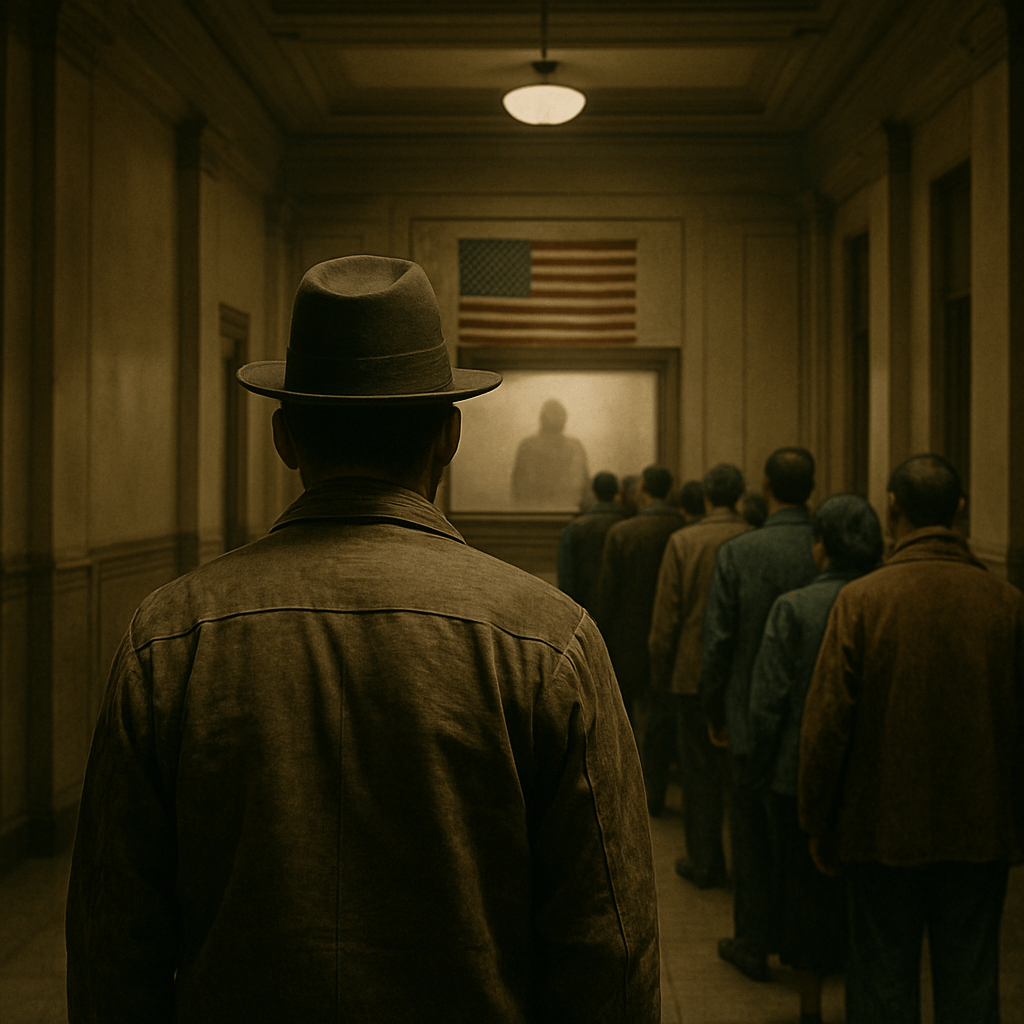
Those who study folklore notice a pattern: hauntings often appear where people were judged, processed, or rejected en masse. Ellis Island. Old courthouses. Military induction centers. Welfare offices housed in former armories.
The presence described is not violent. It lingers.
Some interpret this not as paranormal activity, but as memory refusing to disappear—the psychological imprint of millions told they were insufficient, unworthy, or suspect. A residue left behind by impossible standards.
A Country of Conditional Acceptance
America celebrates self-reinvention, yet punishes those who fail to perform it correctly. The requirements are contradictory by design: work harder, but stay grateful; integrate, but remain visible; obey laws that were never written with you in mind.
Citizenship, in practice, becomes a performance judged daily—by employers, institutions, and strangers.
Failure does not mean exile anymore. It means existing in a permanent state of probation.
Still Here, Still Measured
December 13 stands as a reminder that being American has never been a fixed identity—it is a test continually rewritten. Those who fail are not removed entirely. They remain, unseen, unheard, but present.
If there are ghosts in America, they are not wandering aimlessly.
They are waiting in line.
 The ChillX Zone
Leave a comment