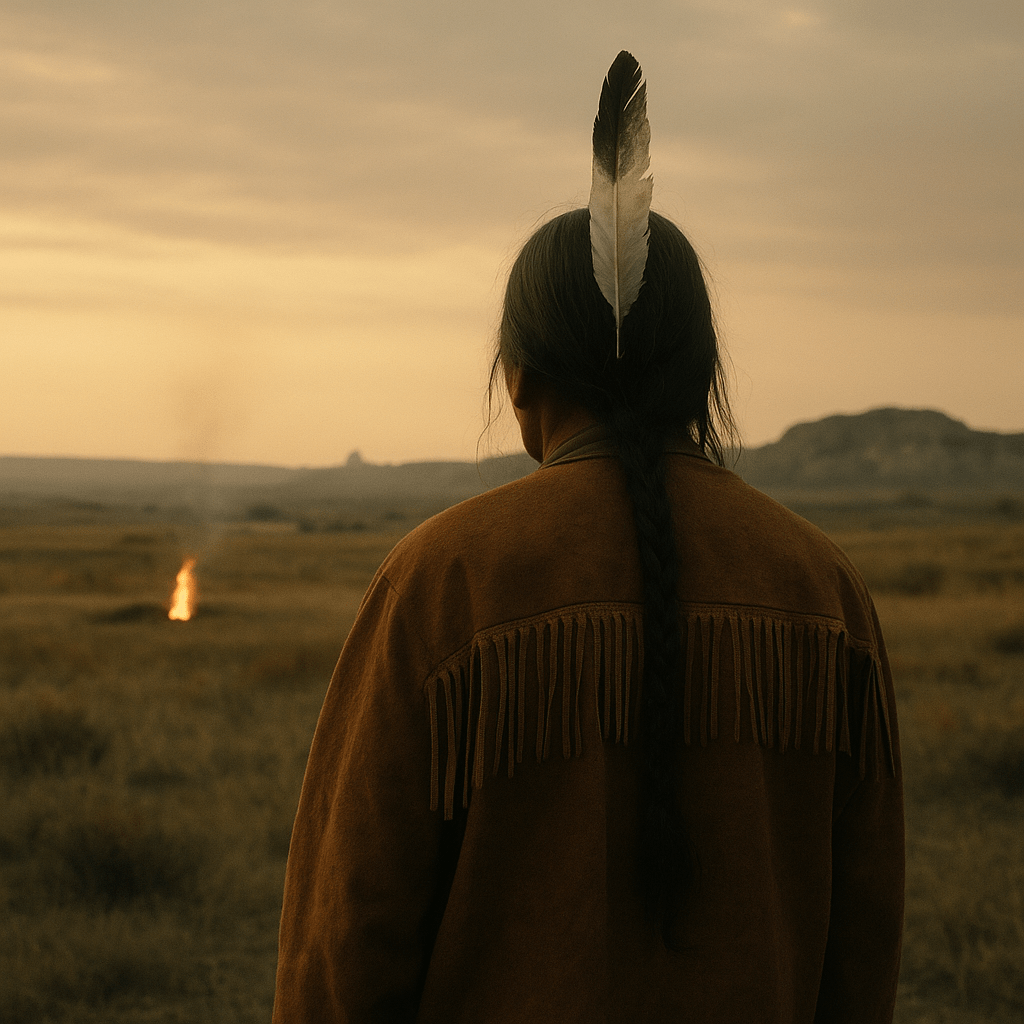
When a People Were Declared Gone — and Refused to Leave
December 12, 2025
On December 12, 1902, a quiet but devastating declaration was repeated in government offices, newspapers, and academic halls across the United States: the Indian was disappearing. Not by war, not by plague, but by assimilation. The phrase carried a deliberate finality, as if a people could be signed out of existence with ink and paper.
What followed has never aligned with that claim.
More than a century later, the land itself continues to argue otherwise.
A Declaration That Never Matched Reality
By the turn of the twentieth century, U.S. officials routinely referred to Native peoples in the past tense. Census language, policy papers, and ethnographic studies treated living nations as remnants—relics of a former age rather than sovereign communities still present on their lands. December 12 became one of several administrative milestones used to finalize land transfers, boarding school placements, and trust revisions under the assumption that Native identity would soon vanish entirely.
It never did.
Instead, something else emerged: a growing number of reports from across the country describing land disturbances, unexplained phenomena, and recurring presences tied directly to displaced tribal territories.
The Word “Indian” and the Background It Erased
The declaration itself rested on a fiction that long predated 1902. The word Indian—never an Indigenous name—was imposed through colonial error and then preserved through policy. It collapsed hundreds of distinct nations, languages, and cosmologies into a single, inaccurate category. This misnaming mattered.
By treating Native peoples as a generalized “Indian race,” policymakers could more easily argue that assimilation into Euro-American society meant progress rather than destruction. The disappearance they predicted was not biological; it was cultural, legal, and spiritual. If the “Indian” was only a category, it could be dissolved. If identity was merely administrative, it could be erased.
What they failed to account for was that Indigenous identity was not rooted in paperwork. It was rooted in land, lineage, and memory. And those do not disappear on command.
The Land Remembers What Paper Forgets
In regions where Native nations were formally closed or declared no longer extant, witnesses began reporting patterns that resisted easy explanation. Footsteps across empty plains. Voices speaking languages no longer taught in schools. Fires seen moving against the wind.
Park rangers in the Southwest quietly logged repeated sightings of figures dressed in period tribal clothing, appearing briefly at dawn or dusk before vanishing without sound. In the Great Plains, farmers described tools left precisely where they had been taken generations earlier, despite no human access to the land.
These accounts were rarely publicized. When they were, they were dismissed as folklore. Yet their consistency was difficult to ignore.
Burial Grounds That Refused Silence
Perhaps most unsettling were reports near former burial grounds that had been relocated or built over following federal determinations that tribes no longer existed in meaningful numbers. Construction crews documented machinery failures with no mechanical cause. Survey markers moved overnight. Ground that collapsed repeatedly, forcing projects to halt.
In several cases, elders from surviving Native communities warned that the land had not consented to being disturbed. They were ignored. The disturbances continued.
A Presence, Not a Haunting
Those who experienced these events often rejected the word ghost. What they described did not behave like traditional hauntings. There was no aggression, no attempt to frighten—only presence. As if something remained simply to be acknowledged.
Anthropologists later noted that many Indigenous belief systems do not separate the living from the ancestral in the rigid way Western traditions do. The land is not inert. Memory is not abstract. The past does not vanish; it inhabits.
The idea that a people could be declared dead while still present on their land may itself be the misunderstanding.
Declared Dead, Yet Still Here
December 12 stands as a reminder of a moment when a people were officially written out of the future. But the persistence of unexplained phenomena tied to Native lands suggests something unresolved—an unfinished sentence rather than an ending.
If the Indian was declared dead, no one informed the land.
And the land, it seems, never agreed.
If you want this adapted next for publication, audio narration, or academic framing, I can do that cleanly without changing the tone.
 The ChillX Zone
Leave a comment