The Ribley Phenomenon Continued Into the Next Year
November 29, 2025
Just two days after the rediscovery of the Black Friday glow recorded in 1675, archivists have now uncovered a previously unknown winter entry dated February 1676, written by a surviving member of the Ribley household. The page was wedged inside the cracked wooden binding of a church ledger, unnoticed for centuries.
The entry offers a frightening revelation: whatever caused the Old Ribley Light did not simply vanish after the Thanksgiving week disturbance. According to the author, the presence entered the home.
The Account: “It Walks Below”
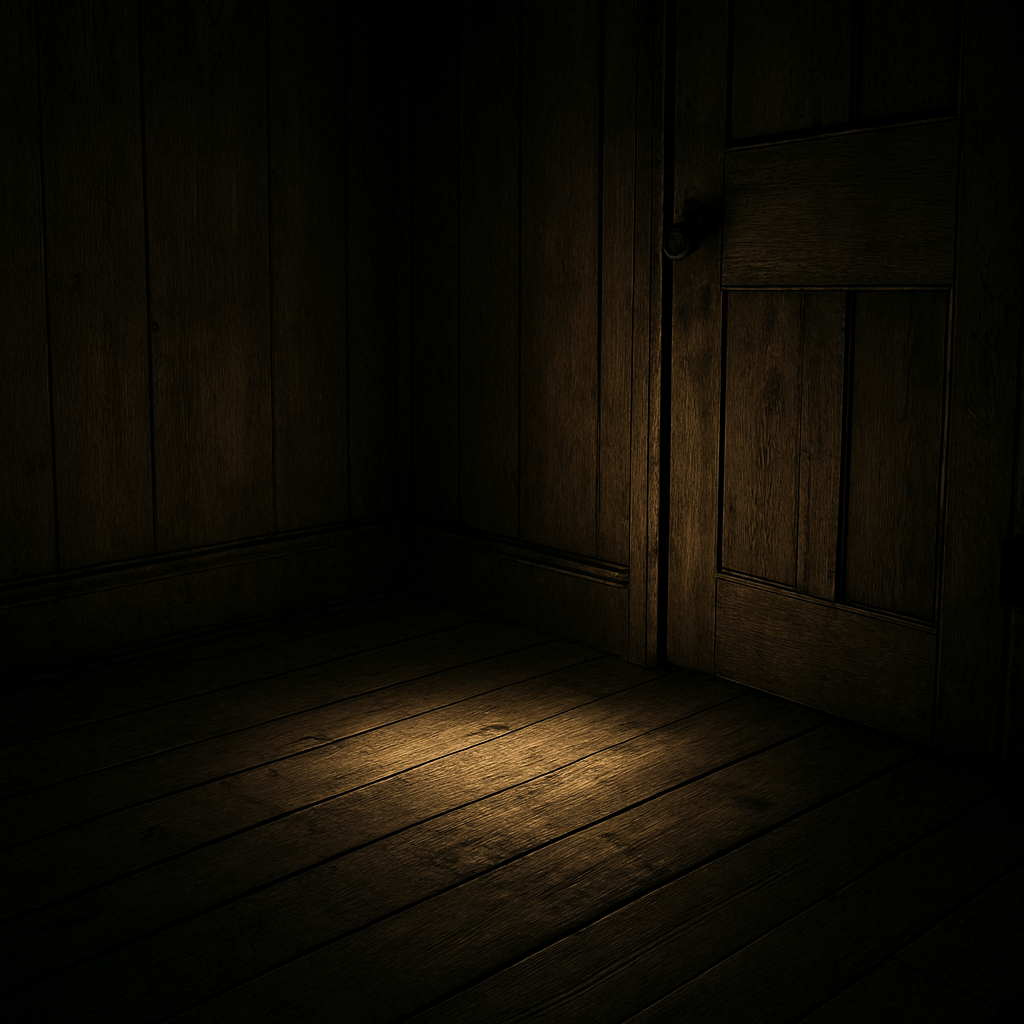
The newly discovered fragment describes violent trembling beneath the Ribley floorboards during the coldest nights of early February. The writer, believed to be Sarah Ribley’s younger brother, claims the shaking was not caused by frost or shifting timber but by deliberate movement, as though something paced directly underneath the house.
He writes:
“We dared not speak. The boards lifted under their nails. Something below searched for a path upward.”
The family stayed awake for three nights, praying aloud until daybreak. Their candles burned unevenly, and their hearth stones rattled with each unseen footfall.
Connections to the Old Ribley Light
Paranormal researchers find the timing chilling.
- The March 1675 beam
- The Black Friday glow
- The November 1675 hearings
- And now this February 1676 internal disturbance
The phenomenon seems to shift: first a light in the sky, then a glow behind the hills, then a presence on the property itself.
Some historians previously believed the Ribley family’s later hardship came from famine, illness, or wartime trauma. But the new entry—now authenticated by handwriting experts—suggests a pattern of targeted disturbance spanning nearly a full year.
The Theory: A Tracking Entity
Several contemporary scholars now propose a disturbing theory: the phenomenon may not have been a single visual event, but a persistent entity tracking the Ribley family. The shift from aerial illumination to ground-level vibration hints at something changing form or proximity.
One paranormal archivist describes the progression as:
“First it approaches from the sky. Then it hides behind the hills. Then it learns the shape of a house.”
The February account marks the first time the phenomenon appears inside the living space, albeit beneath the floor.
Why This Matters Today
The rediscovery of this winter fragment changes the scope of the entire Old Ribley case. It shows:
- the disturbance lasted far longer than previously believed
- the phenomenon had phases or stages
- the Ribley family was uniquely targeted
- the colony’s official records captured only a fraction of the events
As new colonial findings come to light, the true nature of the Old Ribley Light grows darker, broader, and more complex. The February entry suggests the phenomenon may not have been a light at all—but a presence that knew how to follow.
Conclusion: The Winter No One Spoke Of
For nearly 350 years, the February 1676 disturbance remained silent, a page trapped in a forgotten ledger. Its emergence this week continues to reshape our understanding of New England’s earliest recorded paranormal case.
If the Ribley family truly endured a year-long haunting that escalated from sky to ground to home, then the Old Ribley Light may represent the earliest North American account of a multi-phase entity—one that waited, watched, and walked beneath their floorboards.
 The ChillX Zone
Leave a comment