A Terrifying Account from the New Haven Colony Resurfaces After 350 Years
November 28, 2025
Thanksgiving in Colonial New England was not the warm, cheerful celebration we imagine today. In 1675, the holiday fell during the bloodiest year of King Philip’s War, and the New Haven Colony marked the day with somber fasting instead of feasting. Yet what followed their day of prayer was far more unsettling than any hardship of the times.
A newly uncovered record from the Davenport family papers—authenticated just this week—describes a chilling event that took place on the day after their November thanksgiving observance, a date we now call Black Friday. According to the diary excerpt, villagers heard something moving over the harbor at night: a low, droning hum, punctuated by intermittent flashes of cold, white light.
Until now, historians assumed these entries referred to cannon fire from distant skirmishes. But when cross-referenced with Colonial court testimony about the Old Ribley Light, the similarities are impossible to ignore.
The Entry: “A Glow Behind the Hills”
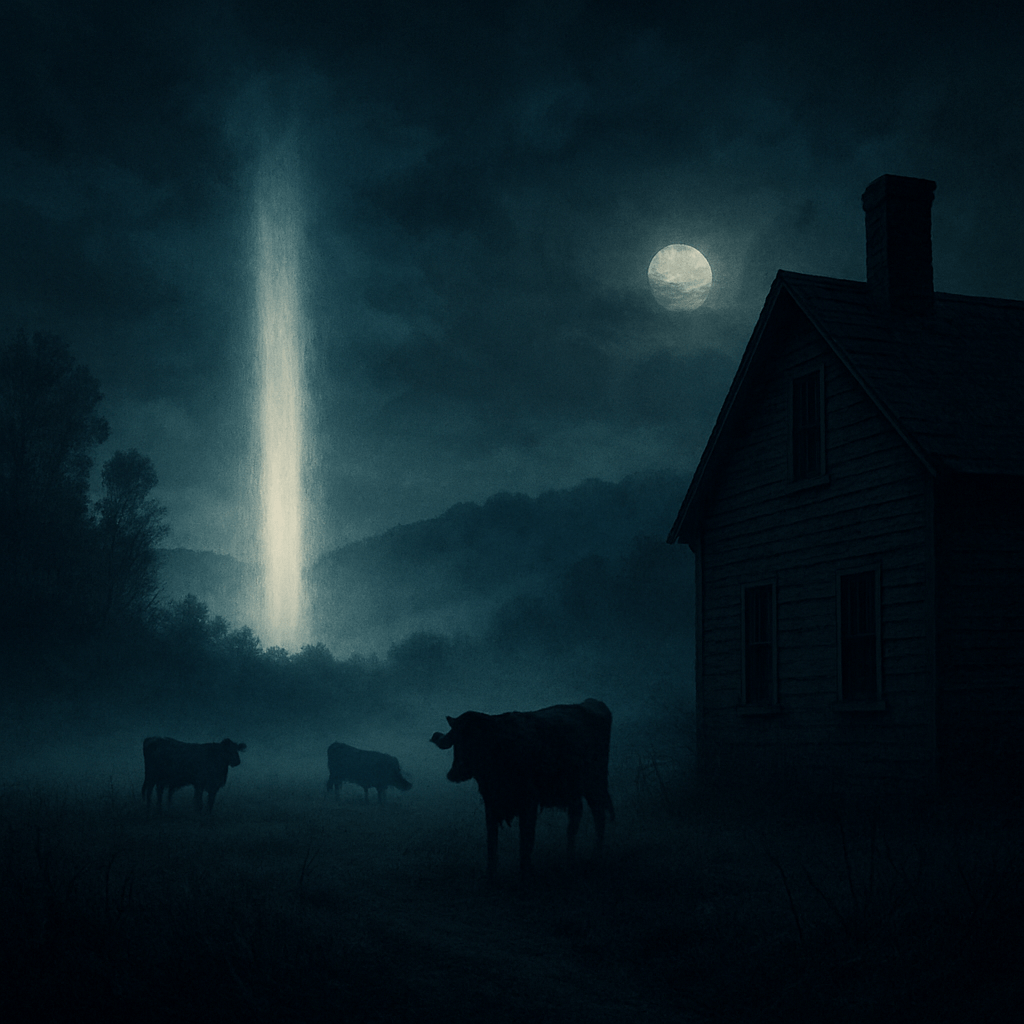
The rediscovered document, dated November 27, 1675, reveals the account of Sarah Ribley—niece of the fisherman whose name later became attached to the March sighting. Her entry describes waking in the pre-dawn hours to what she called a “glow behind the hills, as though the sun rose where it should not.”
She reported that her mother smelled “iron in the air,” and her brother swore he saw the silhouettes of their cattle shifting restlessly toward the shoreline, as if drawn by an unseen force. The family prayed until sunrise, convinced the March omen had returned.
Two days later, Sarah wrote a final, cryptic note:
“The light is not gone. It waits.”
After that, her pages go blank for the rest of the year.
A Pattern Emerges: Thanksgiving Week Visitations
Paranormal researchers now suspect these “Thanksgiving week manifestations” may represent a recurrence pattern of the phenomenon later named the Old Ribley Light. The timing is uncanny: a display in March, official hearings in November, and now this diary describing a Black Friday disturbance mirroring the earlier event.
Several elements align with modern sightings of vertical-luminous anomalies documented in the 20th and 21st centuries:
- the humming vibration
- the animals reacting first
- the stationary glow with no visible source
- the persistent feeling of being watched
The most chilling detail: the glow appearing behind the hills, not above them. Light without an origin remains one of the rarest and most unexplained categories of aerial phenomena.
Black Friday and the Colonists’ Fear of “The Watcher”
Though the term “Black Friday” would not emerge for centuries, the colonists had their own name for the day after their late-November thanksgiving: The Watcher’s Day. Folklore from surrounding towns suggests that settlers believed certain spirits—or divine messengers—observed communities after days of fasting and prayer, testing their faith, judgment, and purity.
The 1675 entries hint that the colonists interpreted the returning illumination as the Watcher itself. With King Philip’s War at its height, many feared this was an omen of destruction. Others whispered that it was not a warning from the heavens but an intruder from elsewhere.
Modern Implications: Why the 2025 Findings Matter
The newly authenticated Ribley notes arrived at a compelling moment. Yesterday’s 350th-anniversary reflection on the November hearings revealed portions of the colonial record that had been missing for centuries. Today’s diary discovery adds new context—and new terror.
The resurfaced documents suggest that the Old Ribley Light did not appear once, nor even twice. It may have been present throughout the year, revealing itself only to those who dared stay awake after the colony’s sacred observance.
And if the accounts are accurate, whatever appeared over the harbor on that Black Friday believed itself to be watching them.
Conclusion: Are We Closer to the Truth?
As more colonial fragments surface after centuries of silence, the pattern behind the 1675 sightings may soon become clear. But one thing is certain: the people of the New Haven Colony lived in fear long after the March beam vanished from their sky—and their Black Friday encounter suggests the phenomenon was no passing anomaly.
Three hundred fifty years later, we still do not know what they saw.
But this week, for the first time, we may be seeing the full shape of the mystery.
 The ChillX Zone
Leave a comment