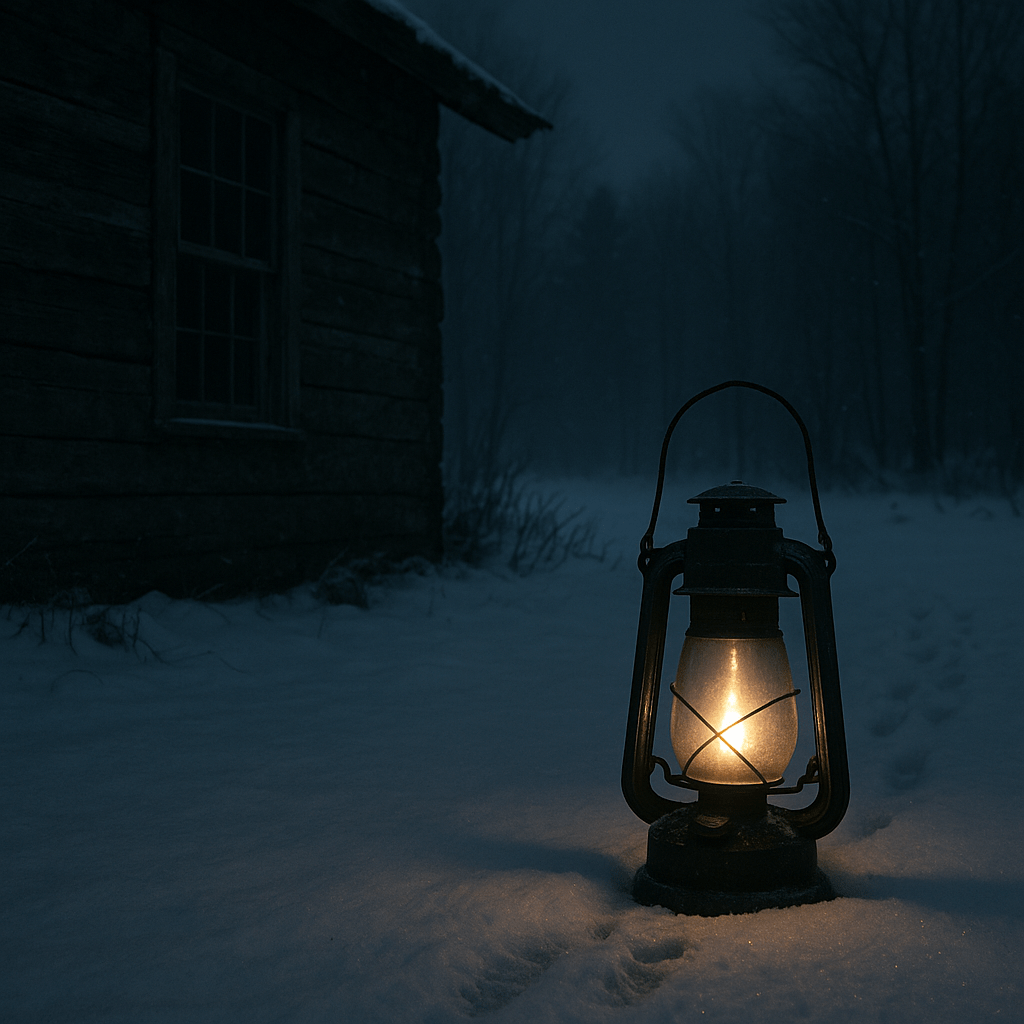
An Unsettling Look Back at a Forgotten New England Haunting
November 20, 2025
A Flicker That Never Died
Among the lesser-known events of early New England, one haunting stands out for its baffling consistency across multiple colonial records. Known locally as The Night of the Unquenchable Lanterns, the incident occurred in the late 1600s in a small northeastern settlement—decades before the famous witchcraft trials shook the region.
Today, on November 20, 2025, the event remains one of colonial America’s most perplexing unexplained disturbances, referenced occasionally in town archives and in the scattered journals of early settlers.
According to the surviving accounts, something moved quietly through the settlement that night. Every lantern, every candle, every hearth responded at once—igniting or flaring with unnatural brightness, even when smothered or deliberately extinguished.
A Colony at the Edge of Darkness
The settlement was a fragile one, perched between forest and ocean, where winter nights stretched endlessly and fire was a matter of survival. Flames were carefully tended and rationed. That is why the event struck so deeply: fire did not behave as it should have.
Witnesses described lanterns bursting into brilliance without a spark. Hearths that had cooled glowed suddenly with roaring flames. Families used clay pots, snow, wet cloths, and even dismantled lanterns in their attempts to put the lights out. Nothing worked. The flames refused to dim.
The glow was so intense that some colonists swore the interiors of their wooden homes looked brighter than midday.
Footsteps in the Frost
One of the most chilling accounts came from a farmer on the edge of the settlement. He stepped outside to investigate the unnatural light and found frost thick on the ground—yet beyond his fence lay a straight line of impressions in the snow. They were shaped like footprints, perfectly spaced, but they did not sink into the frost. It was as though something walked just above the surface, touching nothing.
The closer he stepped to the prints, the brighter his lantern grew, until he dropped it in alarm. Even lying sideways in the snow, its flame burned defiantly.
Another family reported seeing a tall shape at the tree line. They could never describe it clearly; the shadows seemed to shift around it, folding upon themselves as if refusing to reveal what stood there.
A Dawn That Brought No Comfort
Just before sunrise, every single flame in the settlement extinguished at the same instant. Lanterns dimmed, hearths cooled, and the strange tracks outside faded with the early light, as though they had never existed.
The colonists spoke of the event quietly for decades afterward. No one kept lanterns burning after midnight again. It became an unspoken rule: darkness was safer than attracting whatever had passed through the settlement that night.
Even today, archivists occasionally find marginal notes in old church records or diaries—cryptic reminders written by people who lived through that terrifying night.
Never burn a lantern after midnight.
Never give the light a reason to stay lit.
 The ChillX Zone
Leave a comment