The Chill in Arlington
October 21, 2025 — Last night, during a public lecture on the unexplained in Arlington, Virginia, a strange chill passed through the crowd. The speaker paused as a collective shiver rippled across the room. There was no open vent, no draft—just a sudden, synchronized wave of unease that left even the skeptics unsettled. For a moment, everyone seemed aware of something invisible pressing close, as if history itself had brushed the air.
The Founding Fathers and the Spirit World
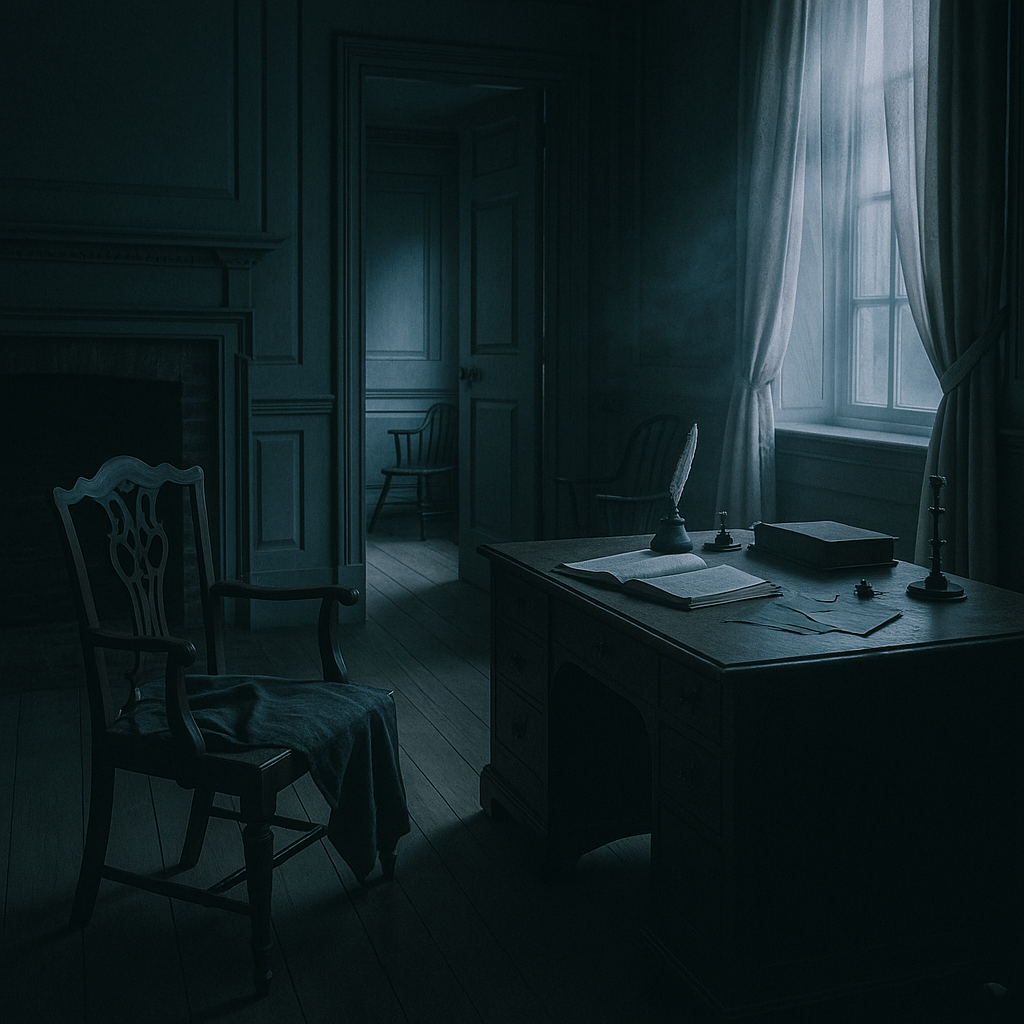
Centuries ago, such an occurrence would not have been dismissed so easily. In George Washington’s era, strange happenings were often viewed through the lens of divine warning or restless spirits. At Mount Vernon, Washington’s home overlooking the Potomac, reports of footsteps, whispering voices, and curtains moving of their own accord began not long after his death. Early caretakers spoke in hushed tones about feeling watched in the general’s old study, and some swore they saw his shadow crossing the hall on moonlit nights.
Benjamin Franklin’s old haunts in Philadelphia tell similar tales — the soft thump of books sliding from shelves, a fleeting figure in a familiar coat near the library he helped found. In their time, such things were not merely curiosities; they were believed to be signs that the dead might linger where great purpose once lived.
When History Lingers
Two centuries later, that sense of “presence” seems to remain. The modern world may bring electrical wiring, faulty air systems, and psychological explanations, yet something persists — an echo that refuses full dismissal. Perhaps it is not the spirits themselves that linger, but the weight of memory. The walls of Mount Vernon and Franklin’s library hold stories carved into them by time, belief, and the human desire to find meaning in what cannot be seen.
A Continuum of Mystery
From Washington’s candlelit corridors to a library meeting room in Arlington, the pattern remains: a quiet moment, a chill, an unseen motion that draws every gaze toward nothing in particular. The centuries between them feel suddenly thinner. What the Founding Fathers might have called a haunting, we now call a phenomenon — but the wonder, the unease, and the fascination remain the same.
 The ChillX Zone
Leave a comment