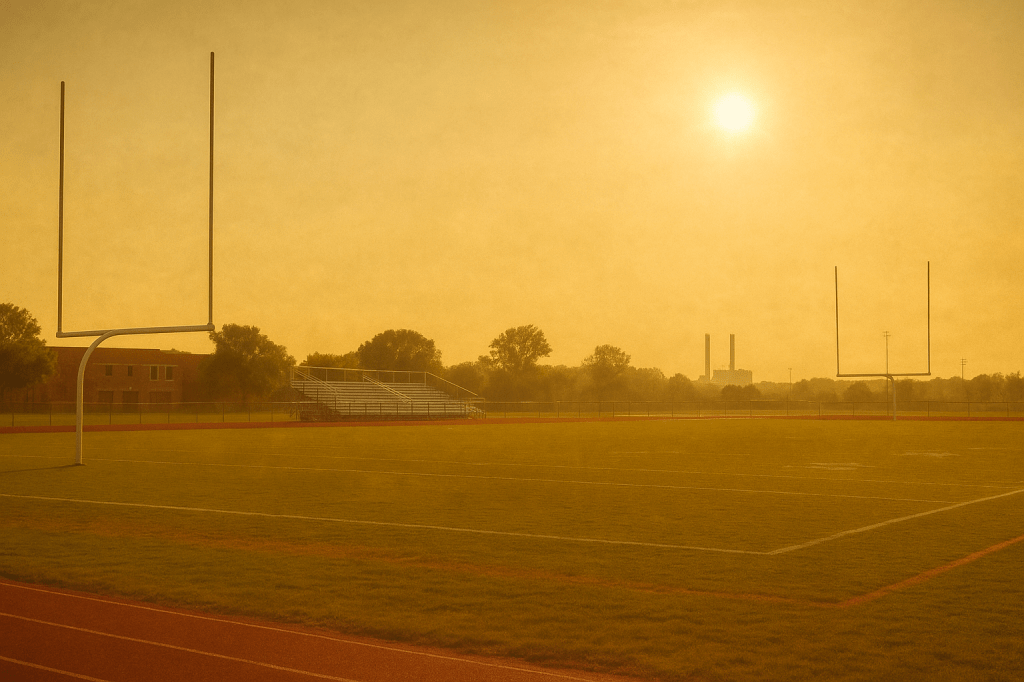
Thirty years of warmer “back-to-school” weather meet rising energy demand — and unexplained aerial activity near nuclear sites adds a strange, worrying layer
September 24, 2025 — UNITED STATES — For many Americans, the first week of September used to bring the relief of cooler mornings and the scent of late-summer rain. Over the past three decades that pattern has frayed: Septembers are warming, “back-to-school” heat persists, and the calendar’s promise of jacket weather arrives later — if at all. Long-term climate records show a clear upward trend in late-summer temperatures across much of the country, and that warming baseline makes brief cold snaps rarer and heat waves more likely.
The first weeks of September aren’t what they used to be
Nationwide temperature datasets show September and the early fall moving steadily into warmer ranges. Scientists frame this as part of “season creep”: spring arriving earlier, autumn arriving later, and warm-season conditions extending deeper into September. Those shifts raise public-health risks, shift agricultural calendars, and lengthen fire seasons in vulnerable regions.
The new load on the grid: AI, data centers, and industry
A key driver behind rising emissions is the explosion of electricity demand from digital infrastructure. Modern data centers — especially facilities built for large-scale AI training and inference — require vast, continuous power for compute and cooling. Where that demand is met by fossil-fuel generation, it contributes to the greenhouse-gas buildup that lifts seasonal averages. New facilities being sited around the country are prompting close scrutiny of local grid capacity, permitting, and whether the incremental load will be offset by renewables or by new gas-fired generation.
Memphis, TN: xAI’s “Gigafactory of Compute” spotlight
Memphis has become a national focal point after proposals for a massive AI compute campus and on-site power plans. The prospect of colossally sized computing operations with supplemental gas generation has sharpened local debates: proponents tout jobs and investment, while critics warn of added emissions, increased air-pollution burdens, and further pressure on regional power supplies.
Defense: a major, often-overlooked emitter
Beyond private industry, the U.S. Department of Defense is one of the country’s largest single institutional users of fossil fuels. Military fuel consumption — for training, operations, and logistics — produces substantial emissions that factor into long-term warming. The Defense Department’s energy choices therefore sit alongside commercial power demand as a meaningful part of the national emissions picture.
Unexplained flights and nuclear sites: a strange overlay
Running alongside infrastructure and emissions debates is an older, uncanny theme: reports of unidentified aerial phenomena near nuclear weapons and energy sites. Veterans, researchers, and investigative journalists have long documented accounts tying strange lights and craft to nuclear missile fields and nuclear facilities.
One frequently cited episode is the alleged 1967 Malmstrom incident in Montana, where former personnel later claimed a glowing object was observed near ICBM fields around the same time multiple missile sites suffered malfunctions. That case and several others have entered UFO literature as emblematic of a “UFO–nuclear” connection, though skeptics have often offered alternate explanations.
In recent years, the Pentagon has acknowledged investigating unexplained aerial events and cataloging reporting hotspots. At the same time, modern utilities report persistent drone activity and incursions over power and nuclear facilities. While many of these incidents may be surveillance or misidentified civilian craft, they reinforce the vulnerability of high-risk infrastructure.
Why this convergence matters
The warming trend that makes early September feel like August is driven by accumulated greenhouse gases from many sources: electricity generation, industry, transport, and military activity. Growing energy demand from compute centers and industrial expansion can push utilities to add generation that, unless clean, keeps emissions high. At the same time, aerial incursions and unexplained sightings near nuclear or grid infrastructure raise security concerns that can indirectly affect energy resilience.
What to watch and what to ask of leaders
• Power-mix decisions: How utilities and state regulators plan to meet new large loads will shape whether emissions grow or decline.
• Transparency on anomalous air activity: Greater openness on drone incursions and unexplained aerial phenomena near sensitive sites can help separate real security risks from folklore.
• Defense emissions accounting: Reporting on military fuel use and clear decarbonization strategies would close an often-ignored gap in national emissions.
• Local resilience planning: Communities near new compute campuses or heavy industry should demand robust environmental reviews, grid-impact studies, and enforceable mitigation to protect air quality and climate goals.
Thirty years from now the question won’t only be whether the first week of September feels cool again — it will be whether society chose cleaner power pathways and tightened the safety of critical infrastructure, or whether piecemeal growth and secrecy let heat and risk compound. The future of “back-to-school” weather, and of public safety around sensitive facilities, will be shaped by those choices.
 The ChillX Zone
Leave a comment