August 11, 2025
The Silent Failures of Human Design
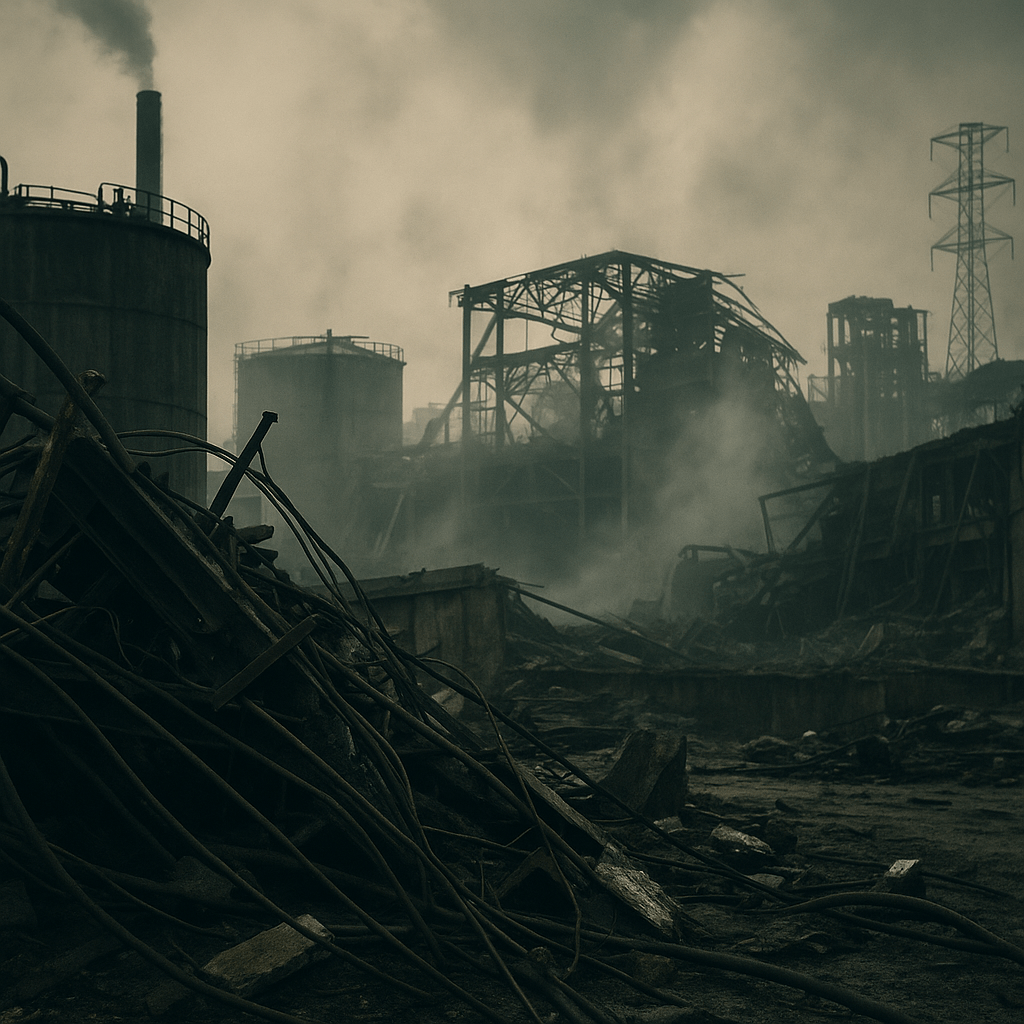
Across the modern landscape, the scars of human error remain etched into steel, stone, and memory. Towering dams—once celebrated as marvels of engineering—have collapsed without warning, unleashing torrents that swallowed entire communities. Chemical plants, built on promises of economic growth, have erupted in fire and toxic smoke, leaving surrounding towns to count their dead and measure the cost in poisoned air and soil.
These disasters, rooted in human design, reveal an uncomfortable truth: even the most precise systems can fail in ways no blueprint anticipates.
The Toll of Oversight
From fractured bridges to derailed trains, each tragedy begins long before the moment of impact. A skipped safety inspection. A corroded joint ignored for too long. A software update that destabilizes an entire control system. Often, these flaws are invisible until they trigger a chain reaction that ends in loss of life.
Investigators sift through wreckage, gathering evidence to trace the collapse back to a single point of failure—sometimes a broken bolt, sometimes a decision made under pressure and against better judgment.
When the Unseen Joins the Equation
And yet, amid the technical reports and forensic diagrams, stranger accounts surface. Cleanup crews report unexplained sounds—footsteps in empty spaces, machinery whirring when power lines have been cut. Flickers of light dart across ruined factory floors, as if the building itself is alive in its final moments.
Are these symptoms of stress and exhaustion? Or do catastrophic events somehow stir something beyond the mechanical, leaving behind more than just debris?
Machinery as Portal to the Paranormal
What if human-made structures are more than just tools and shelter? The constant hum of a generator, the rhythmic pulse of pistons, the charged air in a control room—perhaps these are thin membranes, where the physical and the inexplicable brush against one another.
When such systems break apart violently, could they open a brief passage to something unseen? The thought lingers in the minds of those who have witnessed strange activity in the aftermath of destruction.
Reflections in a Modern Age
In 2025, our cities are defined by intricate systems: power grids, transit networks, industrial plants. We trust them implicitly, but each carries the seeds of its own undoing. And when failure comes, the damage is not only physical.
In the ruins, some say, there is a residual presence—an echo of the people, the energy, and perhaps something else that once occupied the space. As we rebuild, the question remains whether we are simply repairing what was broken, or sealing away something that was briefly let loose.
Final Thought
The legacy of man-made disasters is more than twisted steel and shattered glass. In the spaces left behind, in the silence after the alarms stop, something may remain—watching, waiting, and reminding us that the machines we build are not the only things capable of leaving a mark.
 The ChillX Zone
Leave a comment