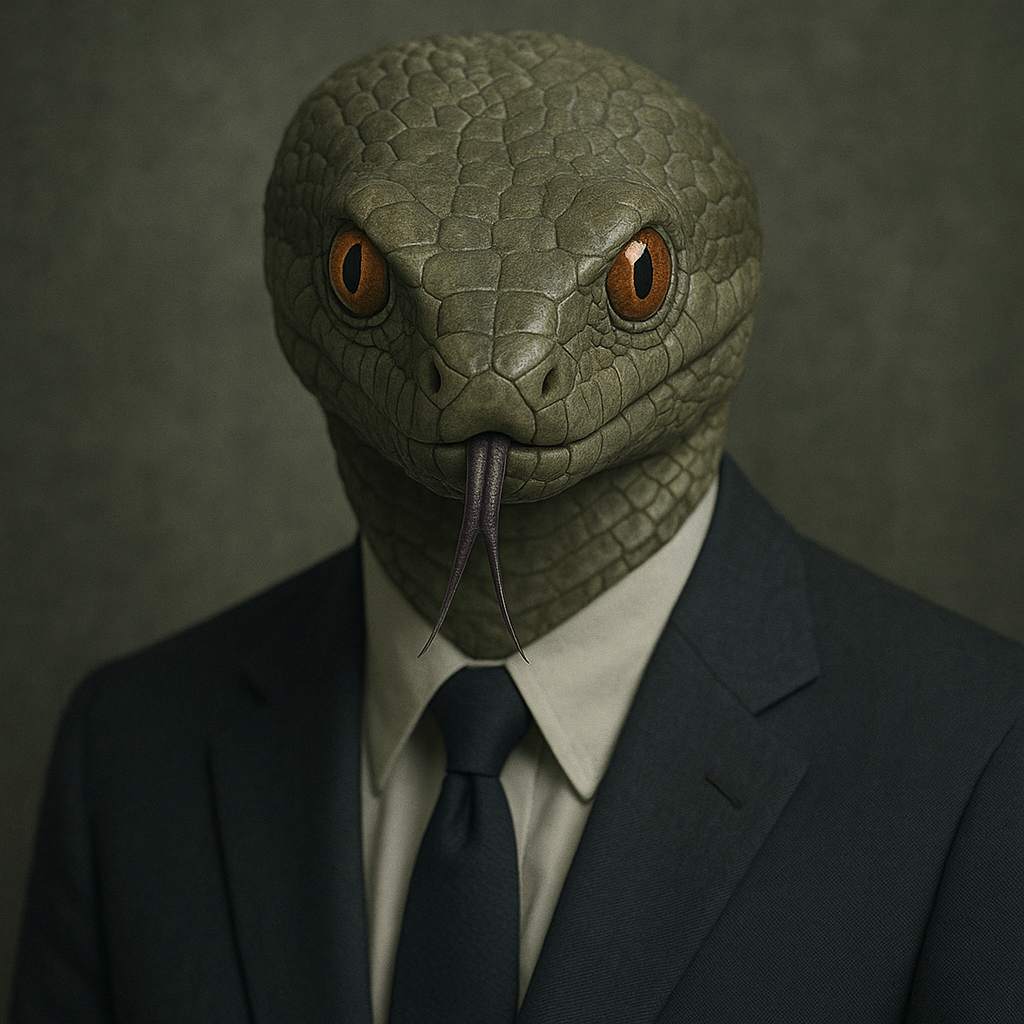
THE BLACK MAMBA & THE REPTILIAN THREAT
A Symbol of Death, Control, and the Unseen Enemy
The Serpent That Strikes Without Warning
On a dry January afternoon in 1998, deep inside South Africa’s Kruger National Park, a student conservationist was bitten by a black mamba while tracking wildlife. The snake, silent and nearly invisible in the underbrush, delivered four puncture wounds—an unmistakable signature of the species. Thanks to rapid intervention and the correct antivenom, the victim survived. But most are not so fortunate.
In Zimbabwe in 2019, three family members—an adult woman, her daughter, and nephew—were killed by a single black mamba. In a separate incident that same year, another man died from a bite after local hospitals lacked access to antivenom. These are not stories of superstition or myth. These are the cold, clinical consequences of one of the most dangerous snakes on Earth.
The black mamba is capable of reaching speeds over 12 miles per hour and delivers a neurotoxic venom that paralyzes and kills within minutes. Before modern antivenoms, it was known to have a near-100% fatality rate. With no roar and no rattling warning, it often kills without being seen.
It is, in every sense, the embodiment of silent death.
The Rise of the Reptilian Human
Around the same time that modern antivenoms began saving black mamba victims, a new fear was spreading—this one in Western consciousness. A theory emerged in the late 1990s that world leaders, royalty, and media elites were not human at all, but instead belonged to an ancient race of reptilian beings.
This belief would remain a fringe concept until the early 2000s, when it found a foothold in online conspiracy communities. These “reptilian humans,” said to be cold-blooded, manipulative, and powerful, were believed to shape-shift and operate in secret. They became symbolic of elite control, emotional detachment, and hidden threats behind masks of authority.
While the snake in the bush could kill your body, the lizard in the palace—so the narrative went—was out to control your mind.
When Myth Invades Reality
In December 2020, a man detonated an RV in downtown Nashville. He left behind writings that included beliefs in lizard people and global manipulation. A year earlier, in Seattle, a man fatally stabbed his brother with a sword, claiming his sibling was a shape-shifting reptilian imposter.
These are not scenes from a science fiction film. They are consequences of a belief system that has evolved from ancient snake symbolism into a modern framework of paranoia, alienation, and delusion.
The psychological profile of those drawn into such conspiracies often includes feelings of helplessness, distrust, and a craving for simplified answers to complex realities. The reptilian image fills a vacuum—an archetype drawn from deep within the human subconscious, where snake and lizard figures have long symbolized cunning, power, and danger.
The Archetype of Cold-Blooded Fear
The black mamba and the reptilian humanoid—though seemingly unrelated—share more than just cold blood.
Both are seen as unseen predators. Both are feared for their speed, silence, and strategy. Both can appear where least expected. The black mamba, in nature, is lightning in the grass. The reptilian humanoid, in myth, is the calm manipulator behind the curtain.
The fear they provoke stems not from what they do in the open—but from what they might be doing when you aren’t looking. They are agents of hidden death and unseen control.
Even in dreams, snakes and lizards often represent betrayal, transformation, or repressed terror. Dreamers speak of serpents chasing them, of cold-eyed beings watching in silence. The subconscious mind stores these creatures as symbols of threat—perhaps the oldest kind of warning system.
The Real Threat Behind the Fear
What ties all of this together is a fear of the unseen.
The black mamba kills fast—often before the victim even understands what happened. The reptilian conspiracy kills slowly—eroding trust, fostering paranoia, and in some cases, leading to violent real-world actions.
In both cases, the threat is magnified by invisibility. It’s what cannot be seen that becomes the most terrifying. Whether it’s a snake in the tall grass or a perceived puppet master behind the media, the human brain reacts the same way: it panics, it projects, it seeks control.
But in seeking control, some turn against their neighbors, their families, even their own minds.
Conclusion: Fangs, Faces, and the Fear Within
As of today, July 28, 2025, the black mamba remains one of the deadliest natural threats in Africa—still responsible for numerous deaths every year. But the psychological mamba—the mythic lizard behind the curtain—has claimed its own victims, too.
From dreamscapes to desert scrub, the archetype persists: the cold-blooded killer, the lurking manipulator, the hidden threat. When snake and lizard symbols rise in our culture, they rarely do so by accident. They are messages—warning signs—reflections of a society struggling with the difference between reality and projection.
We fear what we cannot see. And sometimes, what we fear most is already inside—coiled like a silent disease—spreading not through venom, but through belief. And by the time we recognize it, the bite may already be fatal.
 The ChillX Zone
Leave a comment