Exploring the Shadows of Paranormal Adolescence
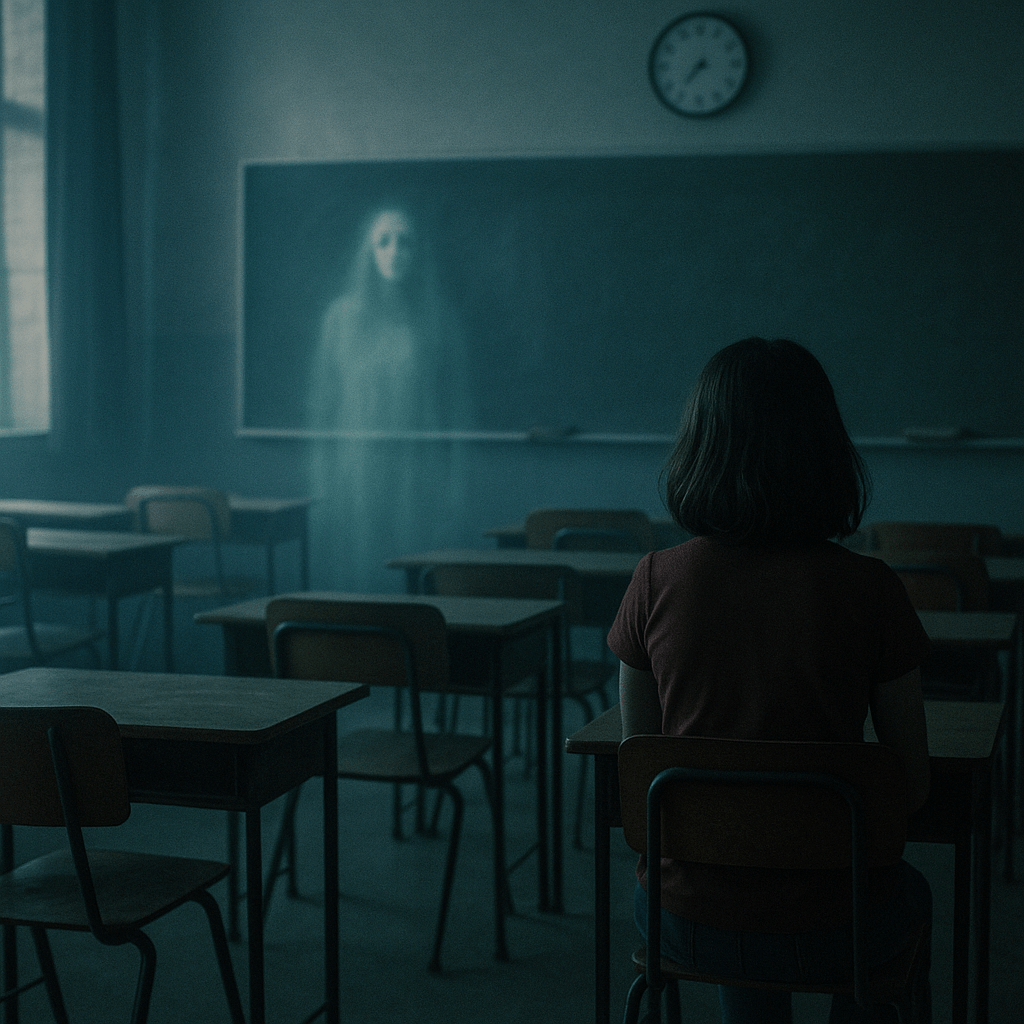
July 24, 2025 – Ask any veteran investigator of so‑called “noisy ghosts” and you’ll hear a familiar refrain: poltergeist cases tend to cluster around adolescents, most often girls, during the storm front of puberty. Whether that’s coincidence, misdirection, mass suggestion—or something genuinely preternatural—remains the fight on the newsroom floor. But the pattern is hard to ignore, and it lands squarely in the debate over how we structure adolescence itself: coed classrooms, gender-separated schools, and the psychosocial pressure-cookers we put teens into just as their bodies and identities detonate into change.
The Adolescent Trigger Hypothesis
Parapsychology’s working hunch since at least the mid‑20th century has been simple: heightened emotional stress + physiological upheaval = “outlet” phenomena—rapping on walls, object displacement, spontaneous appliance failure, cold spots, you name it. Researchers frame it as recurrent spontaneous psychokinesis (RSPK): the mind, under acute strain, unconsciously externalizes its turbulence as physical disturbances.
Skeptics, of course, say that’s just a highbrow way to dodge trickery, attention-seeking, and misremembered events. Still, some case files keep coming up in late-night arguments:
Poltergeist Cases of Adolescence
Amherst, Nova Scotia (1878–1879): Esther Cox, 19, became the center of taps, fires, and apparitions. Whether hysteria or hauntings, it set the tone for adolescent-linked poltergeist stories.
Enfield, London (1977–1979): Two young sisters reported taps, moving furniture, and ghostly voices. Documented by investigators, dismissed by skeptics as pranks, but still one of the most famous poltergeist cases.
Columbus, Ohio (1984): Tina Resch was photographed amid flying objects at home. Accused of staging events, but the case strengthened the link between adolescence and poltergeist activity.
Rosenheim, Germany (1967): Lights blew out, phones dialed themselves, and frames spun on walls near a young female employee. Critics blamed tampering, but anomalies were recorded.
Puberty, Power, and Pressure Cookers
Adolescence is a minefield—identity formation, sexual awakening, social ranking, and academic surveillance—often unfolding inside institutions not built to metabolize that much human volatility. If paranormal reports cluster around adolescents, it’s at least plausible that the environment matters as much as the biology.
The Coed Question: Separate to Soothe, or Separate to Suppress?
Argument for Separation:
- Reduces cross-gender performance anxiety and social signaling.
- Minimizes sexualized scrutiny and rumor cycles that can exacerbate anxiety—fuel for both psychosomatic symptoms and dramatized “hauntings.”
- Creates controlled environments where counselors and educators can track psychosocial stressors without the amplifying effect of coed competitiveness.
Argument Against Separation:
- Risk of repressing healthy development, which can heighten internalized distress—the very kind of psychic pressure that poltergeist theorists say bursts out as “activity.”
- Reinforces gender essentialism, ignoring that boys also feature in RSPK cases (albeit less commonly reported).
- Reduces opportunities to normalize cross-gender interaction, potentially driving symptoms underground and turning the school into a pressure dome.
Middle Path:
- Short-term, context-specific separation during acute behavioral or psychosocial crises.
- Trauma-informed counseling that treats paranormal claims as data points—whether psychological, social, or (if you insist) parapsychological—rather than simple discipline issues.
- Structured outlets (art, drama, journaling, athletics) to discharge emotional energy in ways that don’t turn lockers and light fixtures into scapegoats.
Mass Psychogenic Illness: The “Invisible Agent” Theory
History is littered with outbreaks—fainting fits, rashes, tremors—where no physical pathogen is found, but stress and suggestion ripple through a community like a contagion. In schools, especially, one student’s symptom can quickly become a hallway’s. Slot “haunting” into that framework and you’ve got a non-supernatural engine for very supernatural-seeming nights: noises misheard, shadows mis-seen, emotions mis-attributed. Not proof of ghosts—proof of pressure.
What Schools (and Families) Can Do
- Treat Reports with Respect—But Test Everything
Dismissiveness breeds escalation. Calm scrutiny defuses attention-seeking and surfaces real needs. - Map the Stress
Who’s at the center? What changed recently—home instability, bullying, academic shock, bereavement? Chart it like epidemiology. - Channel the Charge
Give adolescents sanctioned, structured ways to express intensity: theater, writing, and “supervised anomalous activity observation sessions.” - Name the Unknowns
Some educators will refuse any paranormal framing; others will indulge too quickly. The sane middle: “We don’t know yet—let’s gather facts.” - Consider Targeted Group Separation
Not a blanket gender split, but temporary, supportive cohorting around high-stress students—aimed at decompression, not moral policing.
Bottom Line
Whether you believe in poltergeists or pressurized psyches, adolescence is the fulcrum. It’s where biology, identity, and environment collide—and sometimes, the furniture moves. The debate over coed separation isn’t just about curriculum or tradition; it’s about how we contain, release, or pathologize adolescent energy at its most volatile.
Maybe the real question isn’t whether ghosts exist—but whether we’ve built school systems that can hold what adolescence actually is: loud, unstable, electrified. If we haven’t, expect more taps on the walls—whether from pipes, pranksters, or something no EMF meter can meaningfully measure.
 The ChillX Zone
Leave a comment