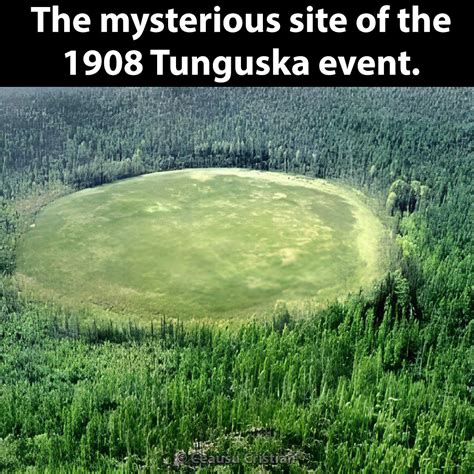
84 Years On, Siberia’s Fireball Continues to Baffle
MOSCOW (June 30, 2025) — At exactly 7:14 a.m. on June 30, 1908, a blinding fireball tore across the pre-dawn sky above Siberia’s Tunguska Basin. In an instant, an explosion estimated at 10–15 megatons leveled more than 800 square miles of taiga—uprooting trees in a perfect radial pattern and shattering windows hundreds of miles away. Eighty-four years after the first official Soviet investigation, the Tunguska Event still eludes definitive explanation.
Voices from the Inferno
“I watched night turn to day as a pillar of flame swept over us,” recalls Pavlina Ignatova, who was just 12 at the time.
Villagers threw themselves to the ground as a shockwave “shook the earth like an angry god,” she says.
When Soviet survey teams finally reached the site in 1927, they found only a vast, craterless wasteland—igniting decades of speculation about what actually struck the remote forest.
Scientific Theories—and Dead Ends
Most researchers today favor the air-burst of a comet fragment as the likeliest culprit, a hypothesis that explains the absence of a traditional impact crater. Yet analyses of soil samples, anomalous tree-ring patterns, and recent Russian-American satellite surveys revealing subtle magnetic disturbances have only deepened the mystery—leaving no single theory fully satisfying.
Fringe Explanations Persist
Outside mainstream science, some parapsychologists argue the blast sprang from a fleeting rupture between dimensions, unleashing psychokinetic forces. Others invoke Siberian folklore, claiming that ancient forest spirits—guardians of the taiga—channeled a surge of psychic energy when their realm was threatened.
Though these ideas lack hard evidence, they continue to thrive in obscure journals and late-night radio programs.
Echoes on the Taiga
Tonight in Irkutsk, scholars pore over century-old expedition diaries during public lectures, while young enthusiasts gather by the riverbank under the midnight sun to screen documentaries. As World Asteroid Day prompts reflection on cosmic hazards, the Tunguska mystery remains a stark reminder that nature can astonish—and still keep us guessing.
By the Numbers: Tunguska Event
- Date & Time: June 30, 1908, 7:14 a.m.
- Estimated Yield: 10–15 megatons
- Area Affected: 800+ square miles of taiga
- First Expedition: 1927 (Leonid Kulik-led Soviet team)
- Leading Hypothesis: Comet fragment air-burst
Whether viewed through the lens of hard science or speculative inquiry, Tunguska stands as one of the 20th century’s most compelling enigmas—its final secret still whispered on the Siberian wind.
 The ChillX Zone
Leave a comment